Finca Palma Bellota: A Story of Family, Craftsmanship, and Tradition in Northern Coclé
In the mountains of northern Coclé, one family has found in the bellota palm much more than the raw material for their crafts. Their story is one of equality, shared work, and how traditions can become a way of teaching new generations. During my visit, I came to understand that the greatest value of Finca Palma Bellota does not come from the land itself, but from the people who have cared for it for decades.
Reading time: 9–10 minutes
“Whenever my father came back from El Valle, he would bring a long loaf of bread. He divided it equally among all of us.”
That was how one of my first conversations at Finca Palma Bellota began.
That seemingly simple memory turned out to be one of the best ways to understand what the Soto family has built over generations. It was not really about a loaf of bread. It was about equality, sharing, and a way of understanding life that can still be felt throughout the farm today.
For some time now, I have been interested in getting closer to people who work with their hands and have built projects around a craft, a tradition, or a particular relationship with their land. That is how my Miscellaneous Projects began: a series of documentary visits through which I seek to understand the stories behind farmers, artisans, families, and communities, and share them with those who, like me, are curious about how these projects come to life.
This time, the road took me to the community of Sofre, El Águila, in northern Coclé.
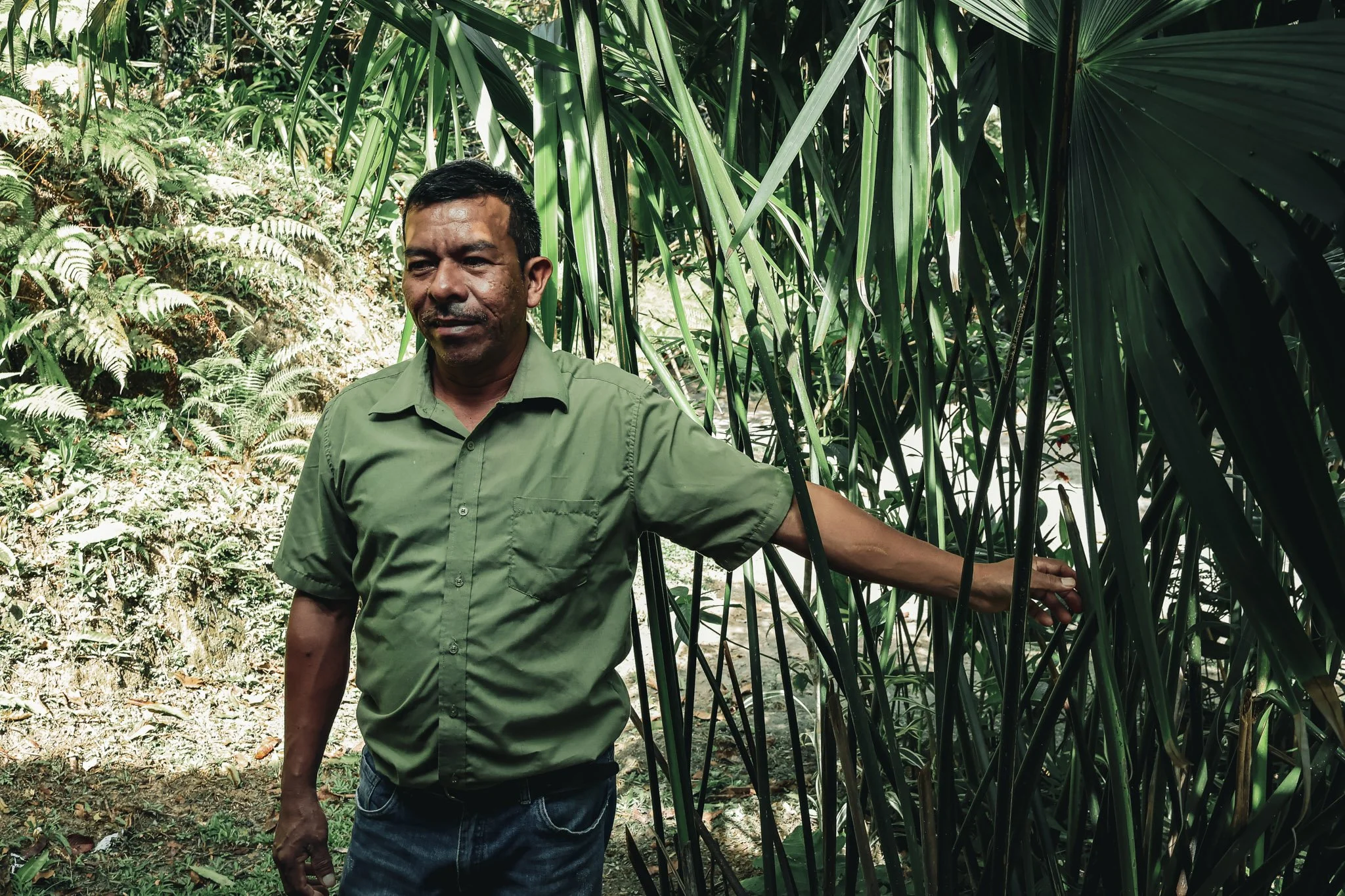
Carlos Soto sharing his knowledge and stories about the bellota palm.
A welcome that keeps a memory alive
The family welcomed me with a cup of coffee made from beans grown on the farm and a traditional corn bollo. As we talked, they explained that Don Félix Soto, the founder of the farm, always welcomed people into his home this way. He is no longer with them, but the family has kept the tradition alive as a way of keeping his presence with them whenever someone walks through the gate.
That small gesture stayed with me throughout the rest of the visit. Before we had even started walking around the property, I was beginning to understand that Finca Palma Bellota was not simply about a plant or a craft. It was about the people who, for decades, had found in both a way of life.
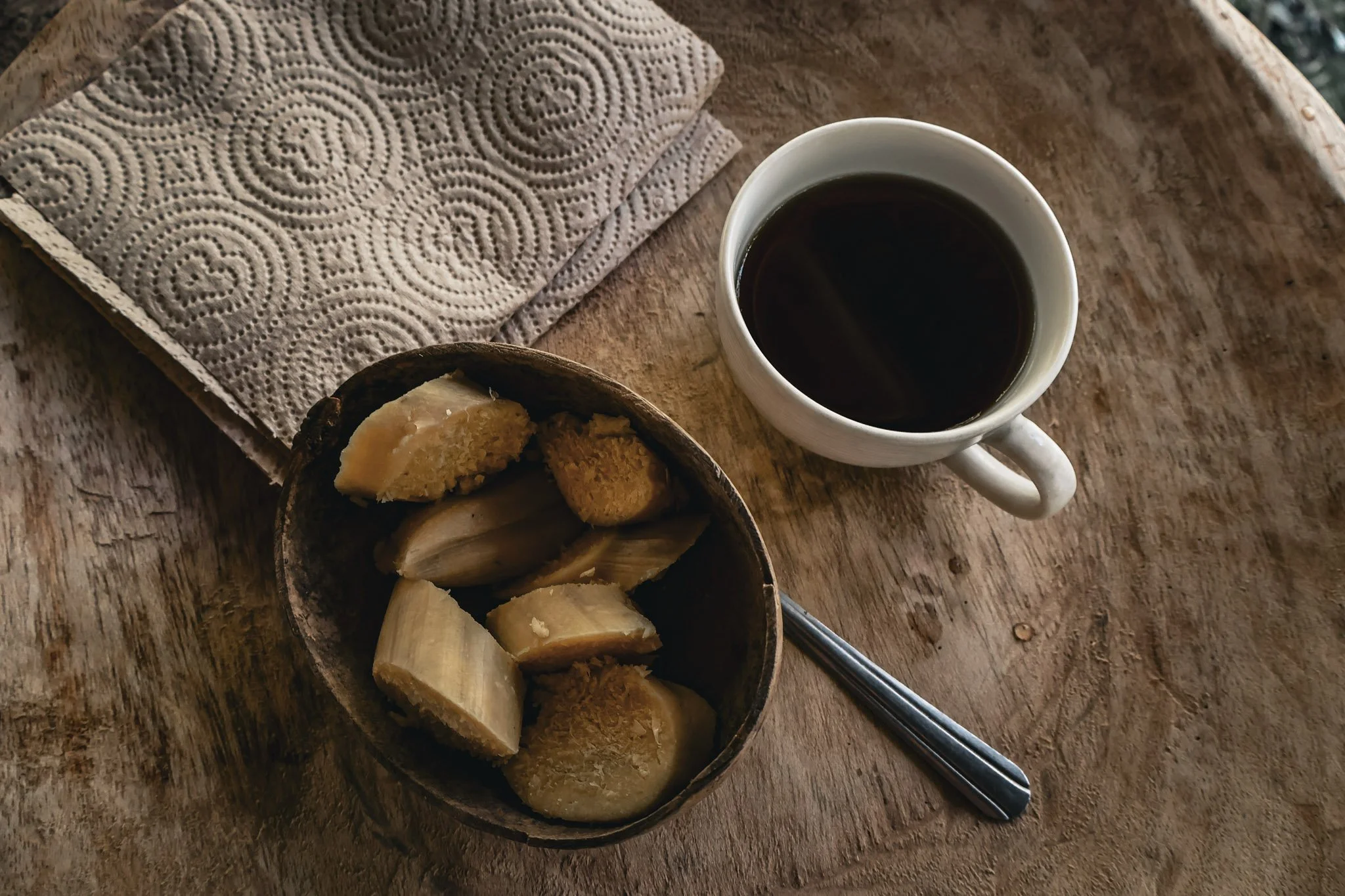
“Our grandfather always welcomed visitors with a cup of coffee. And that is how we continue to do it.”
A plant that supported a family
Finca Palma Bellota has existed for more than sixty years. It was founded by Félix Soto and Mariángela Magallón, who found in the bellota palm a way to support their family and raise their eight children.
Don Félix learned the craft when he was only fourteen years old. Not long after, he began walking to El Valle de Antón to sell the pieces he made. At the time, the journey took more than three hours along mountain paths. Today, the same trip can be made by car in about fifteen or twenty minutes. Thinking about that difference helps put into perspective the effort involved in walking there to sell his crafts and then making the journey back home.
Over time, he began carrying more than his own work. He would also take pieces made by other people in the community and help sell them in El Valle. When he returned, he gave each person the money from what had been sold. It was a simple way of growing alongside his community and understanding that progress meant more when others could benefit from it as well.
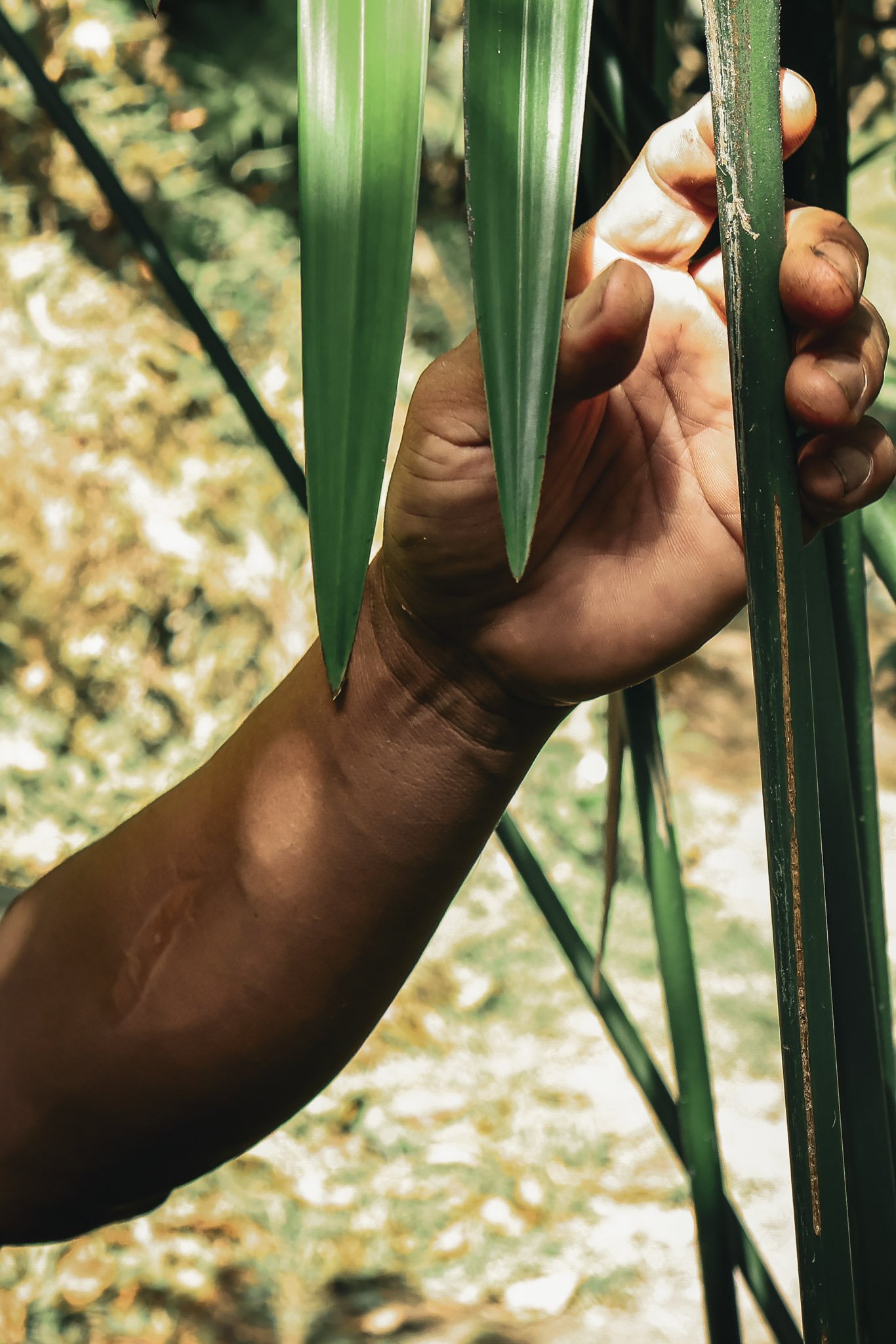
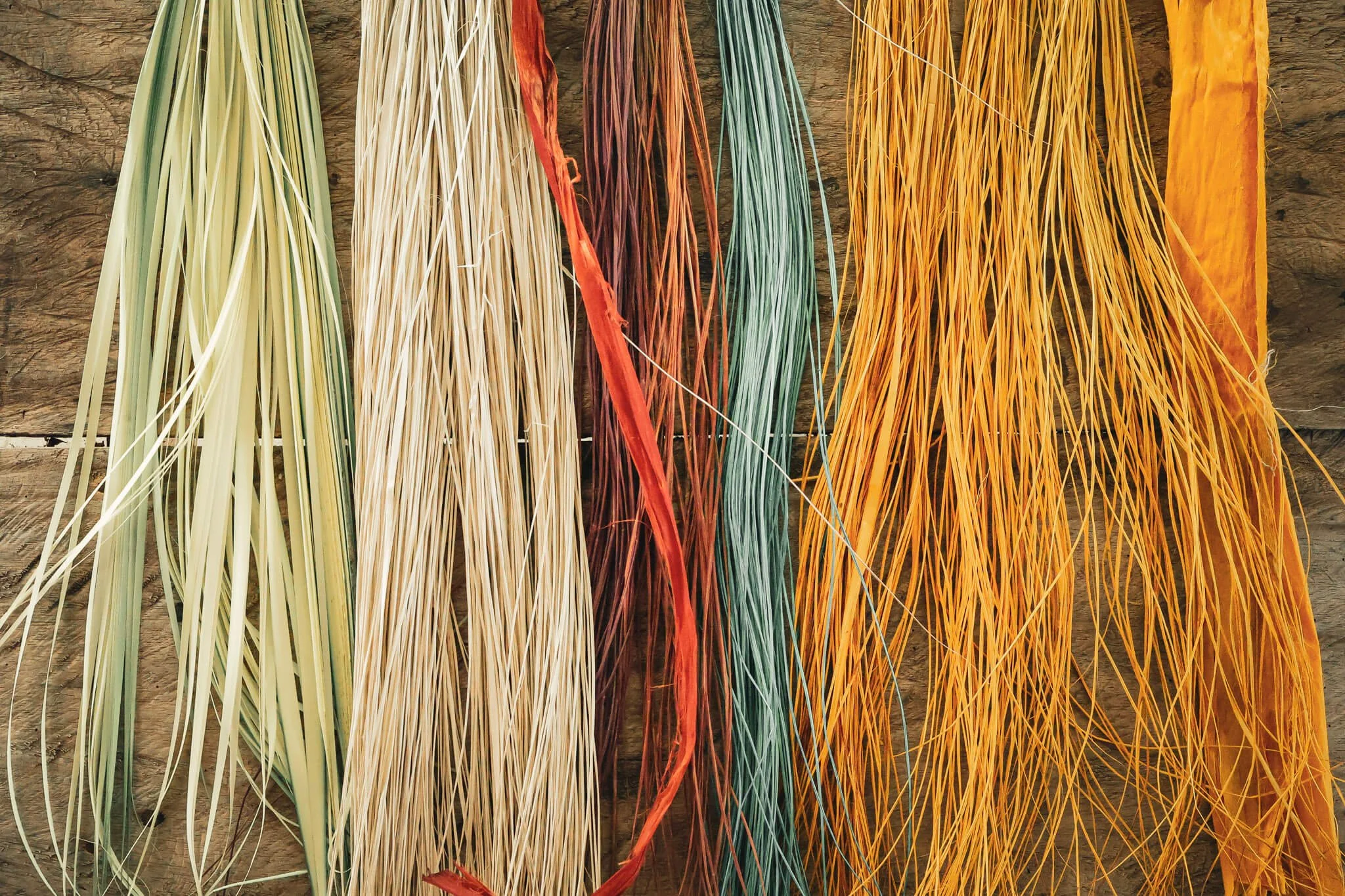
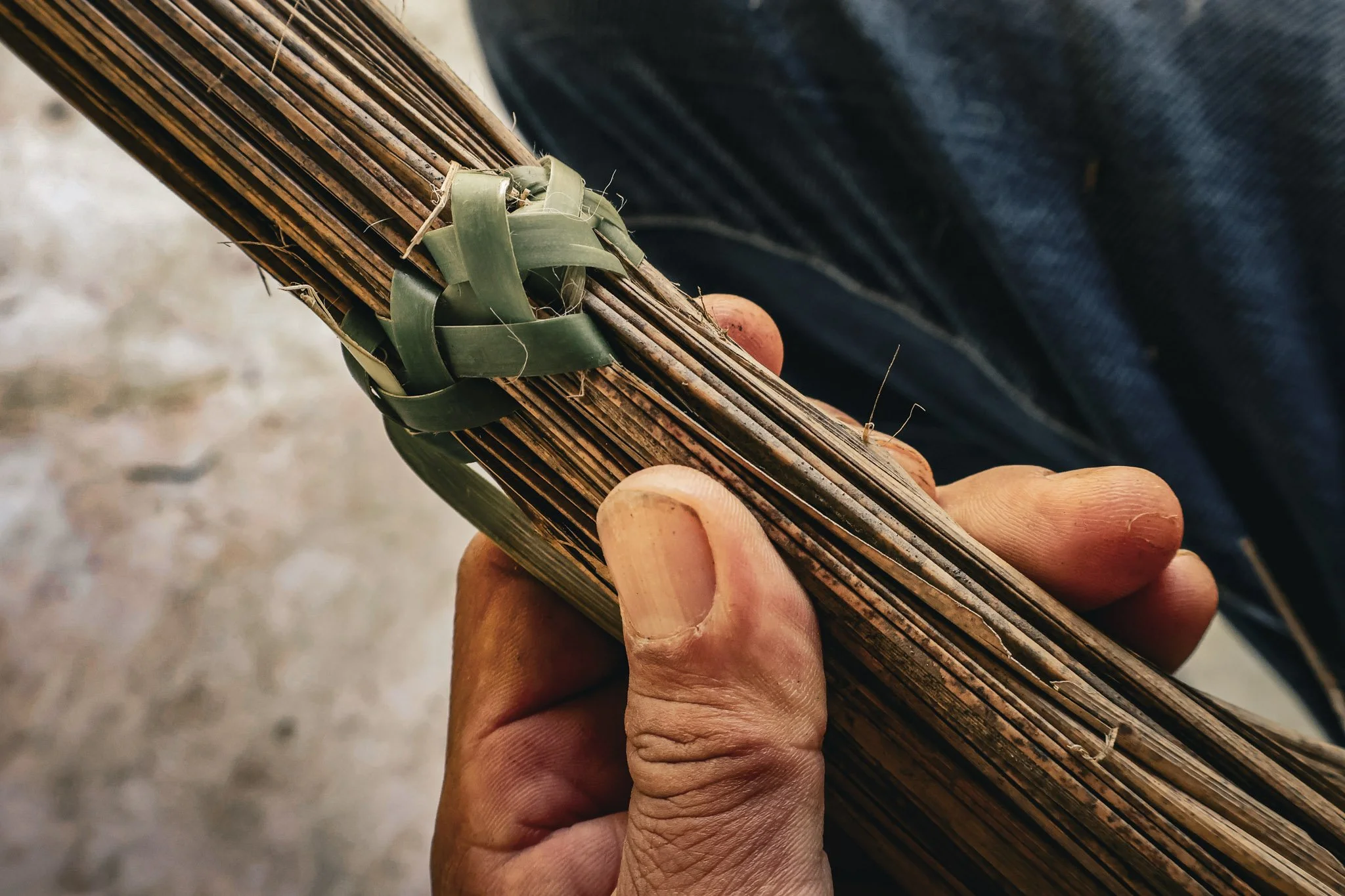
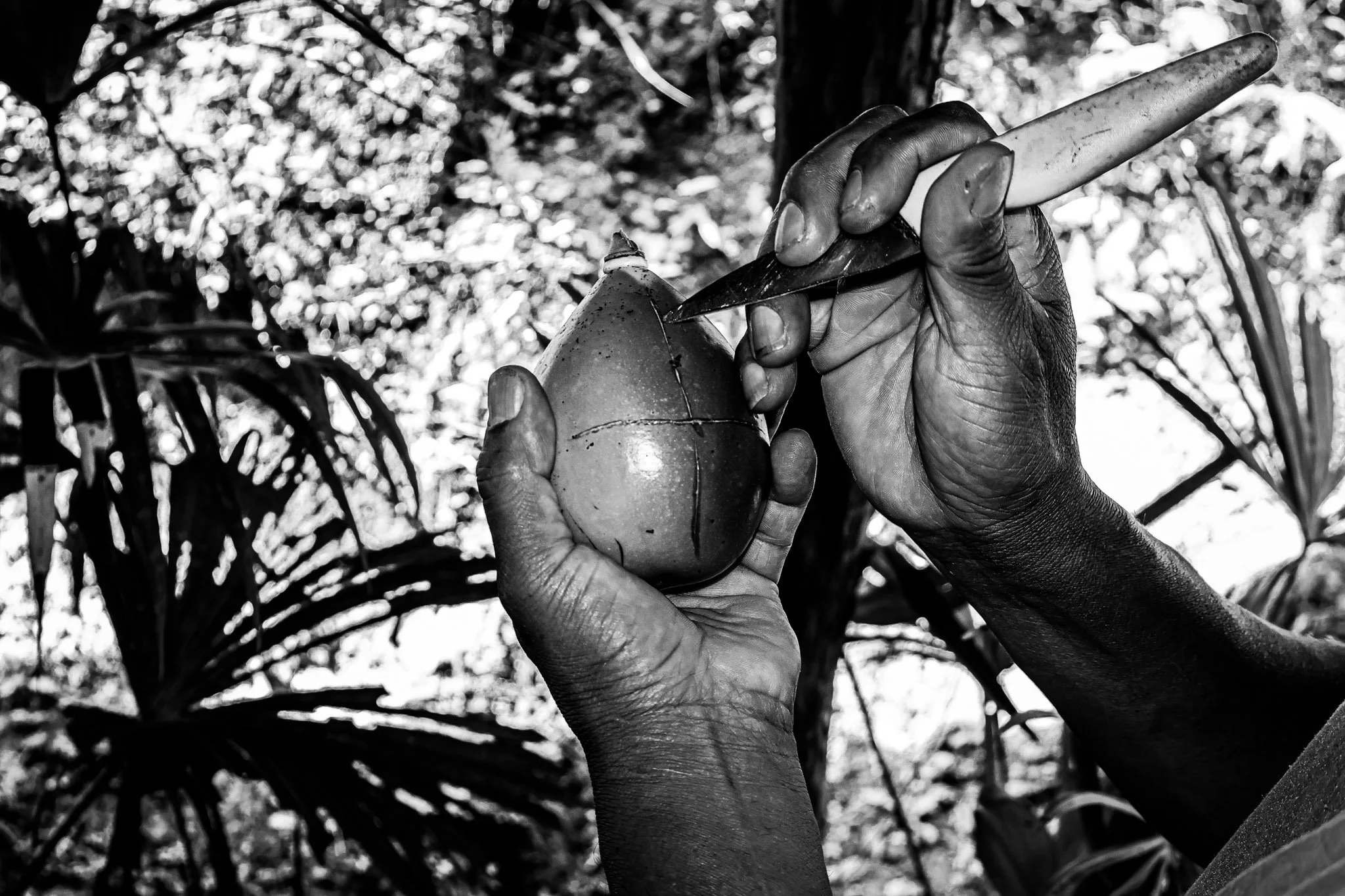
Hands selecting the young bellota leaves before separating and preparing the fiber.
The value of sharing
During our conversation, Carlos Soto joined us. He is one of Don Félix's sons and one of the people who now help keep the project alive. He was the one who brought us back to the story of the bread.
His father would return from El Valle with a single loaf and divide it equally among all the children. If there was enough for one, there was enough for everyone.
As Carlos told me the story, I understood that the lesson had never really been about bread. It was about equality: learning from an early age that sharing was not determined by how much you had, but by the decision to share what you did have.
Perhaps that is why, as I walked around the farm, it became clear that this project did not belong to any one person. Each member of the family had found a different way to contribute and help it continue growing while respecting the legacy of those who came before them.
From selling crafts to sharing knowledge
Over the years, the family decided to take the farm in a new direction. Instead of waiting for people to encounter their crafts elsewhere, they began inviting them to visit the place where the story itself began.
That is how Finca Palma Bellota evolved into a rural tourism and educational project.
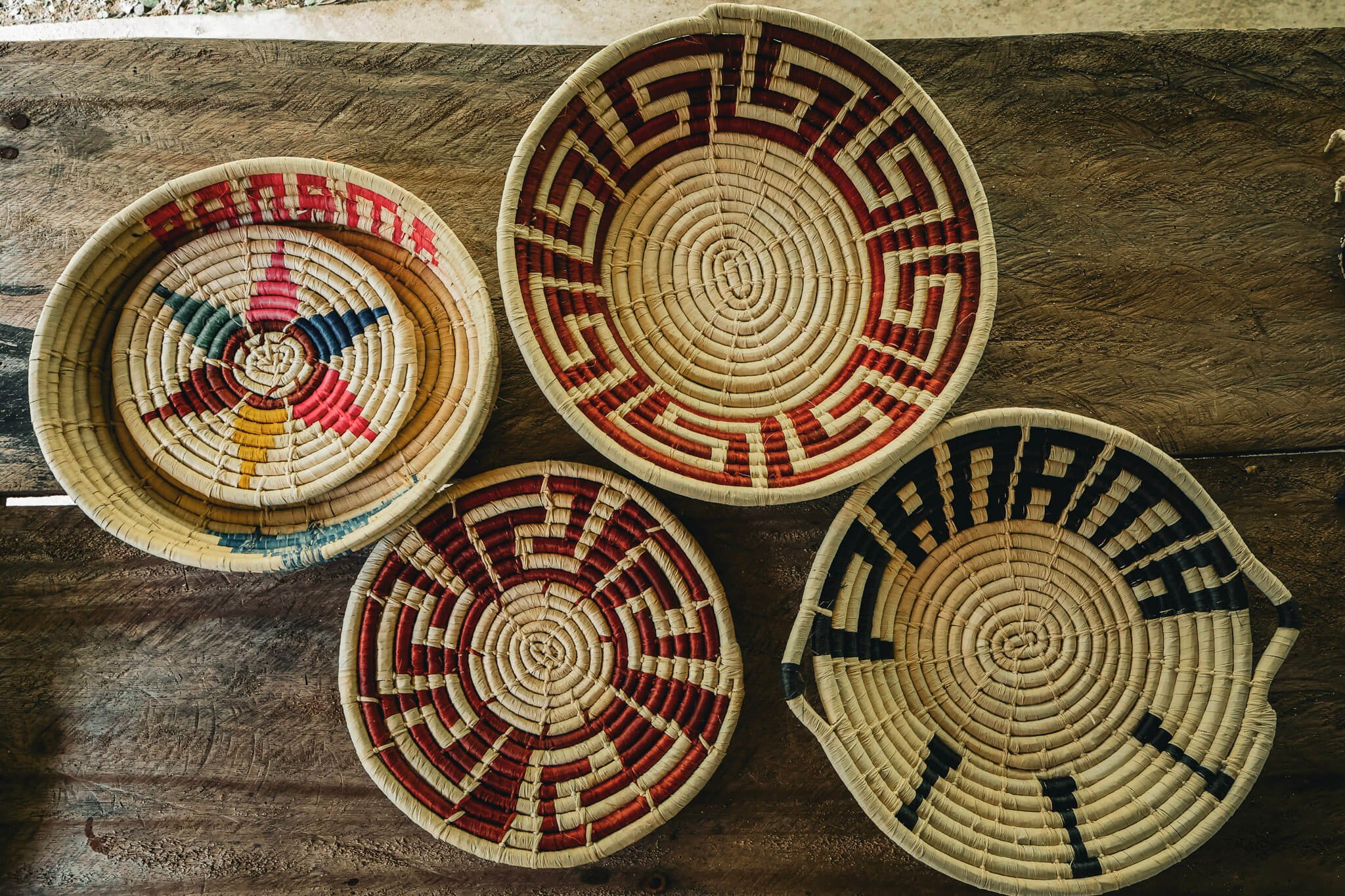
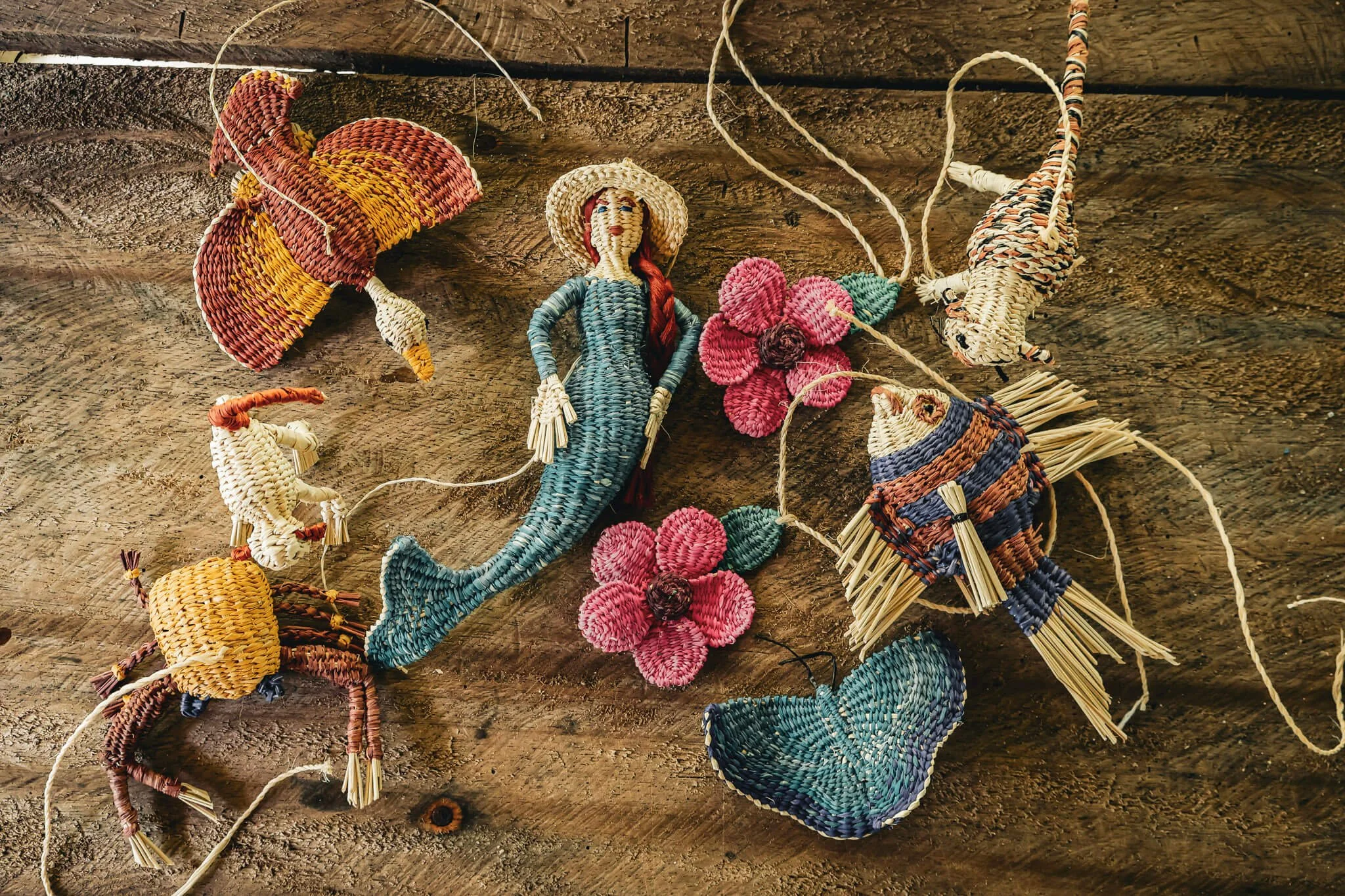
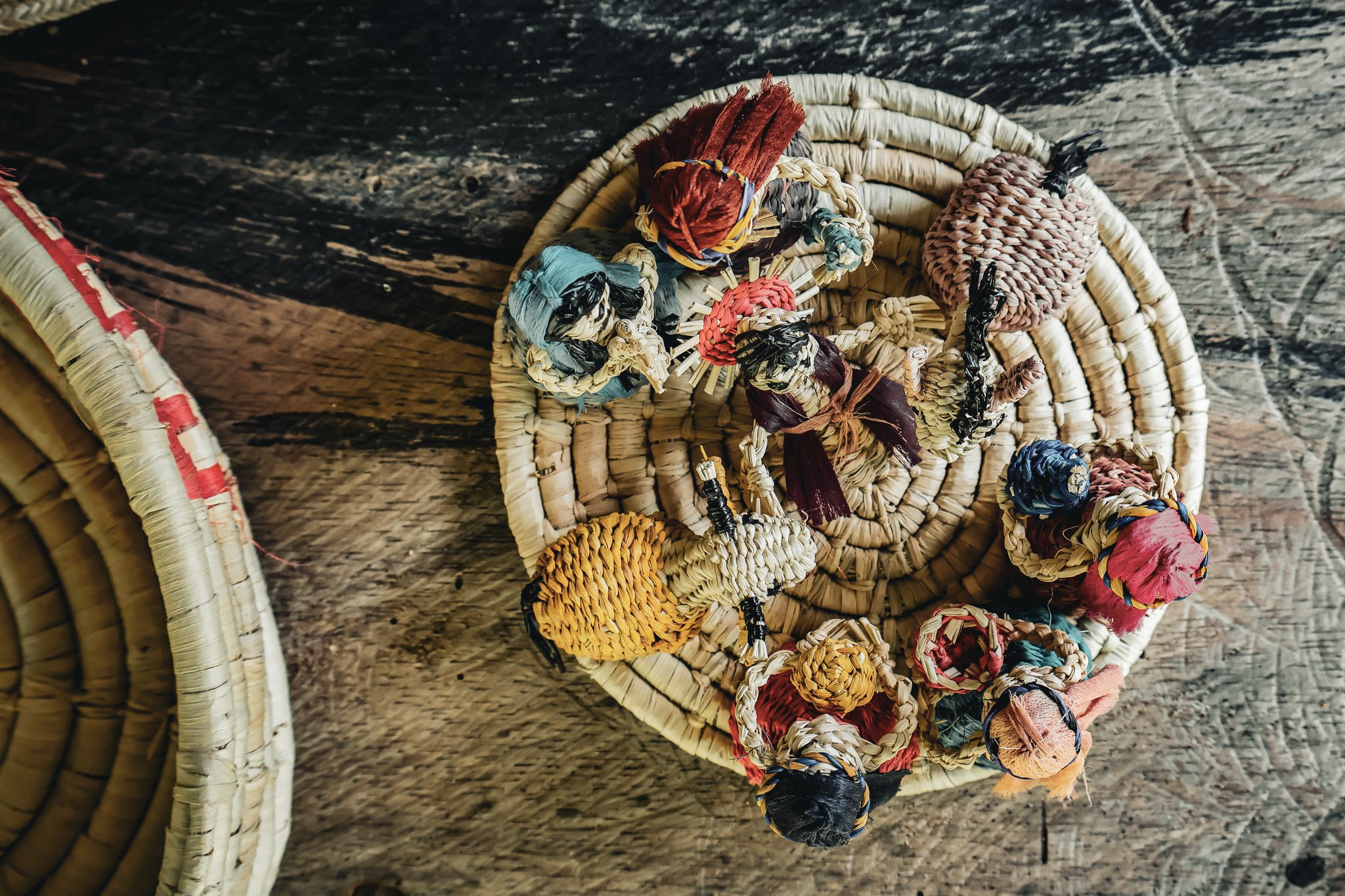
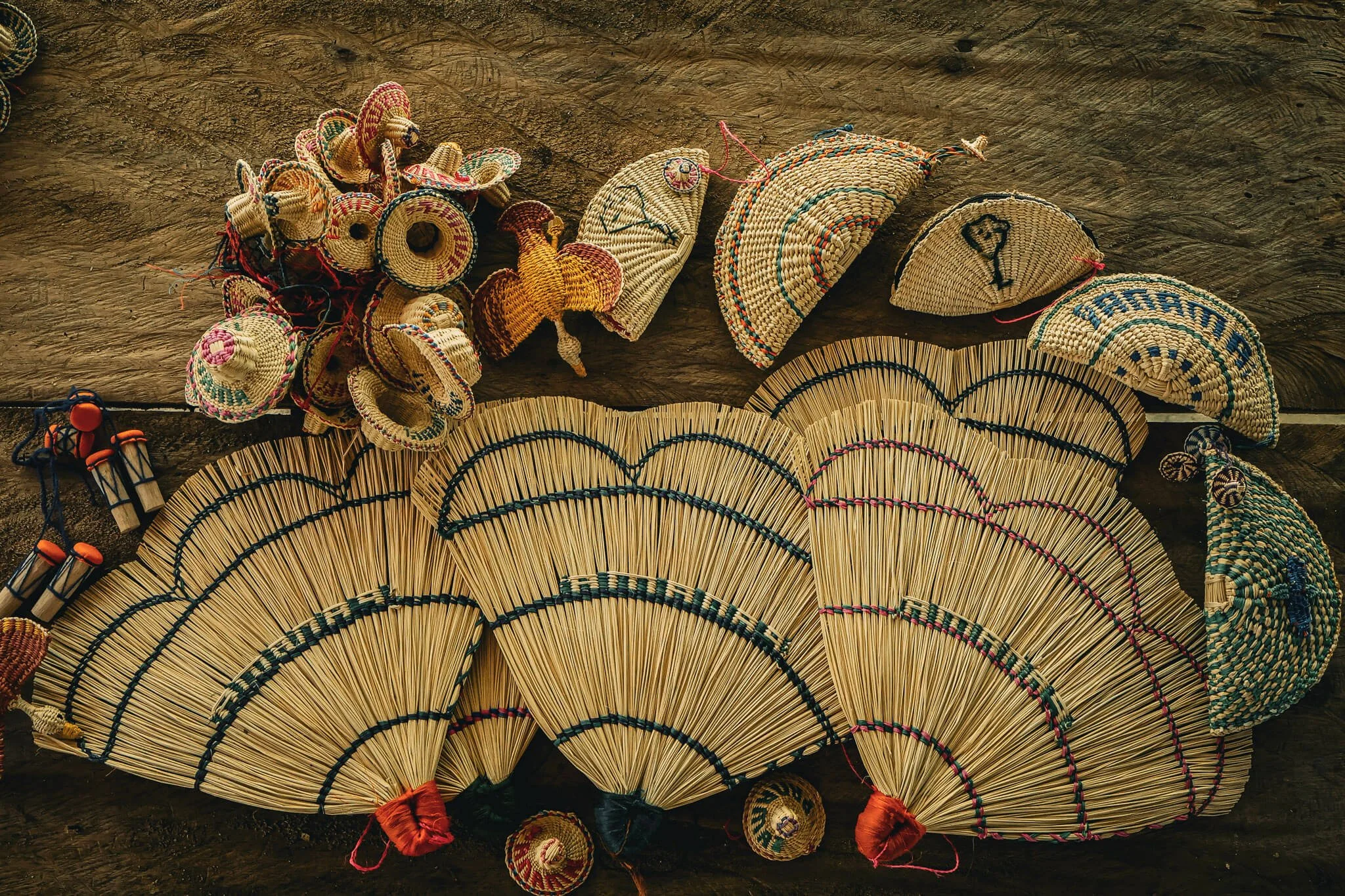
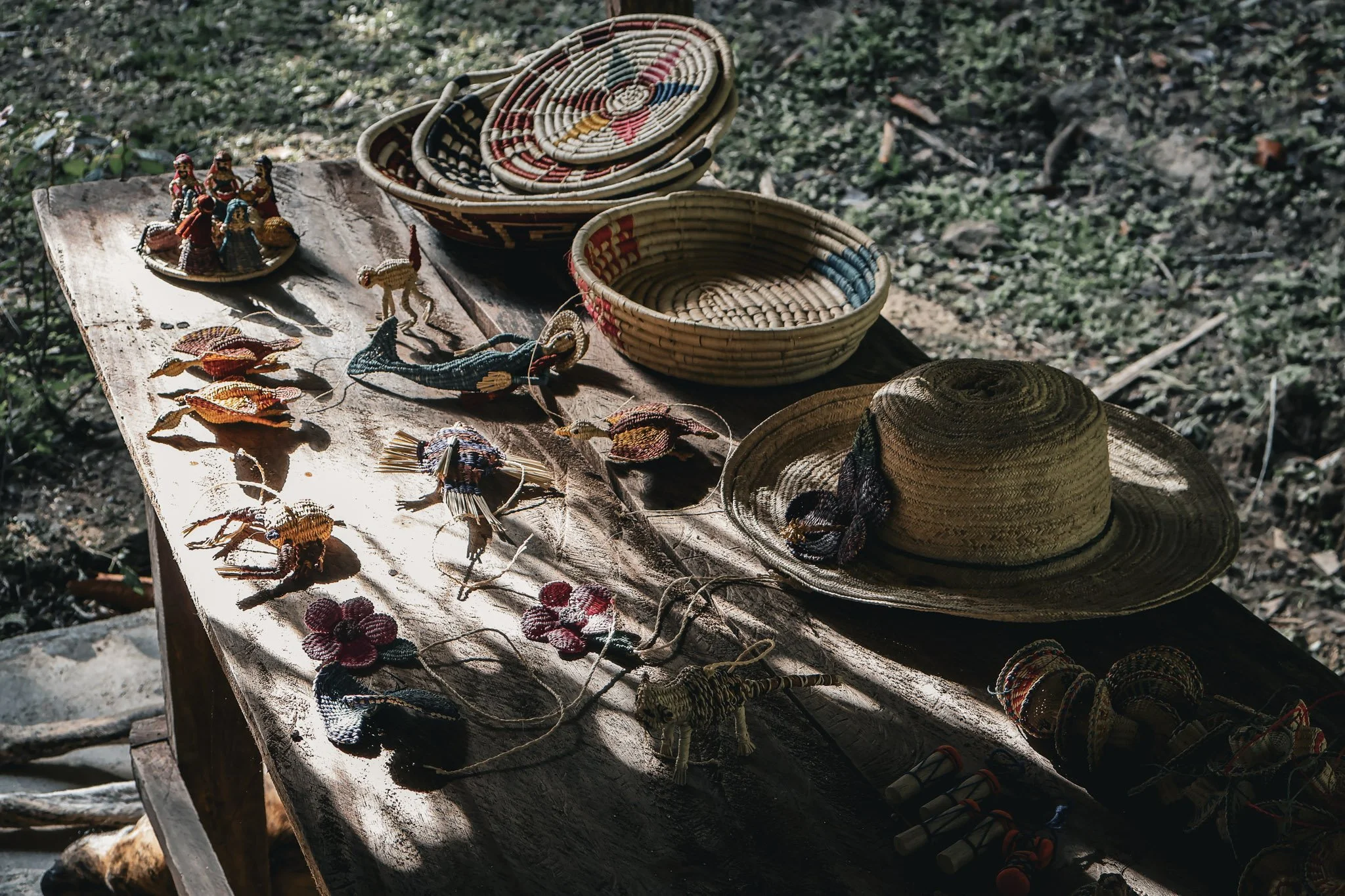
Today, the experience includes a guided walk around the farm, a basic craft workshop, a natural-dye workshop, locally grown coffee, and conversations about the history of the bellota palm and the communities that still depend on it. The purpose is not simply to teach a technique, but to help people understand the work, time, and knowledge behind every handcrafted piece.
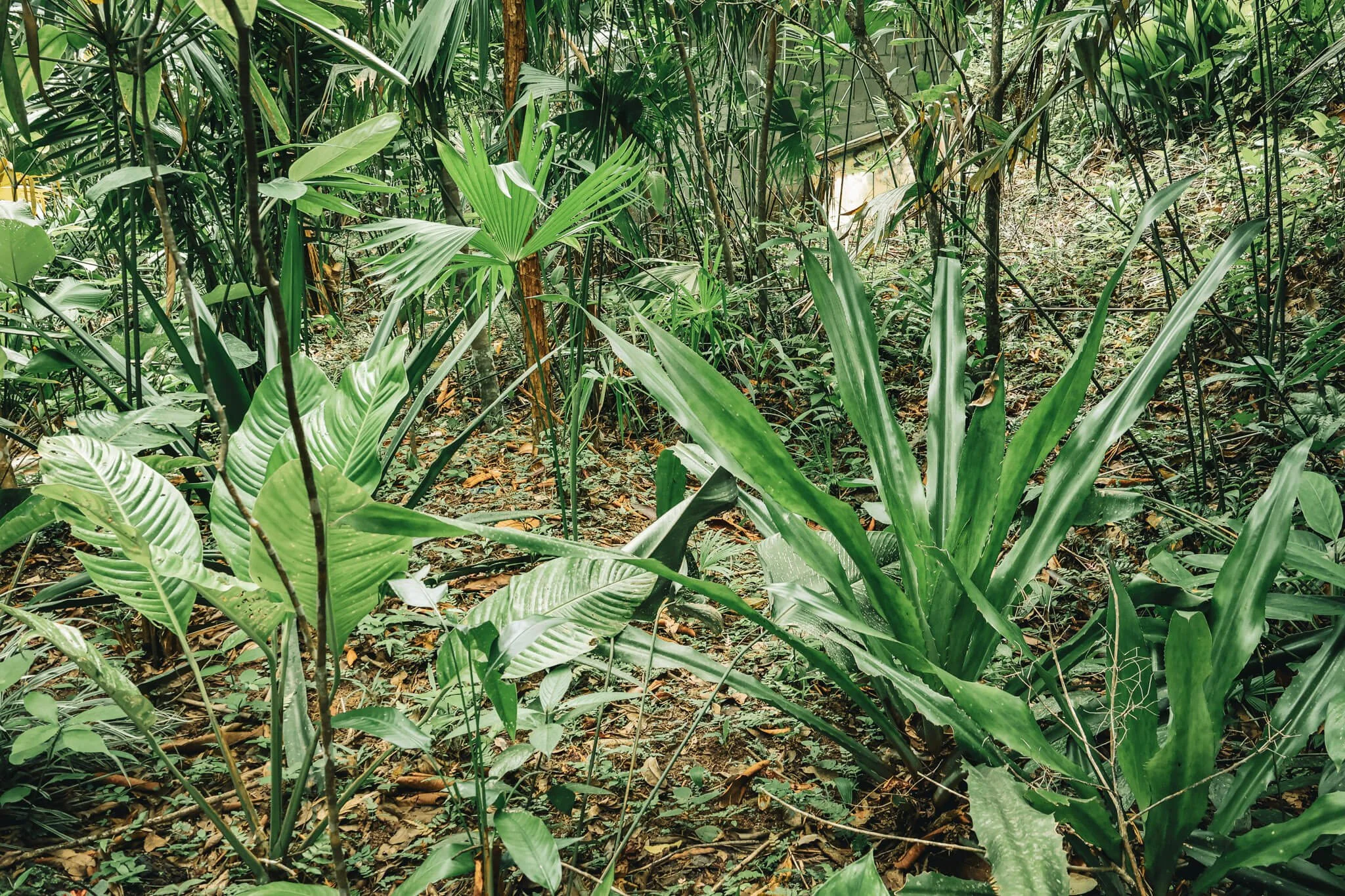
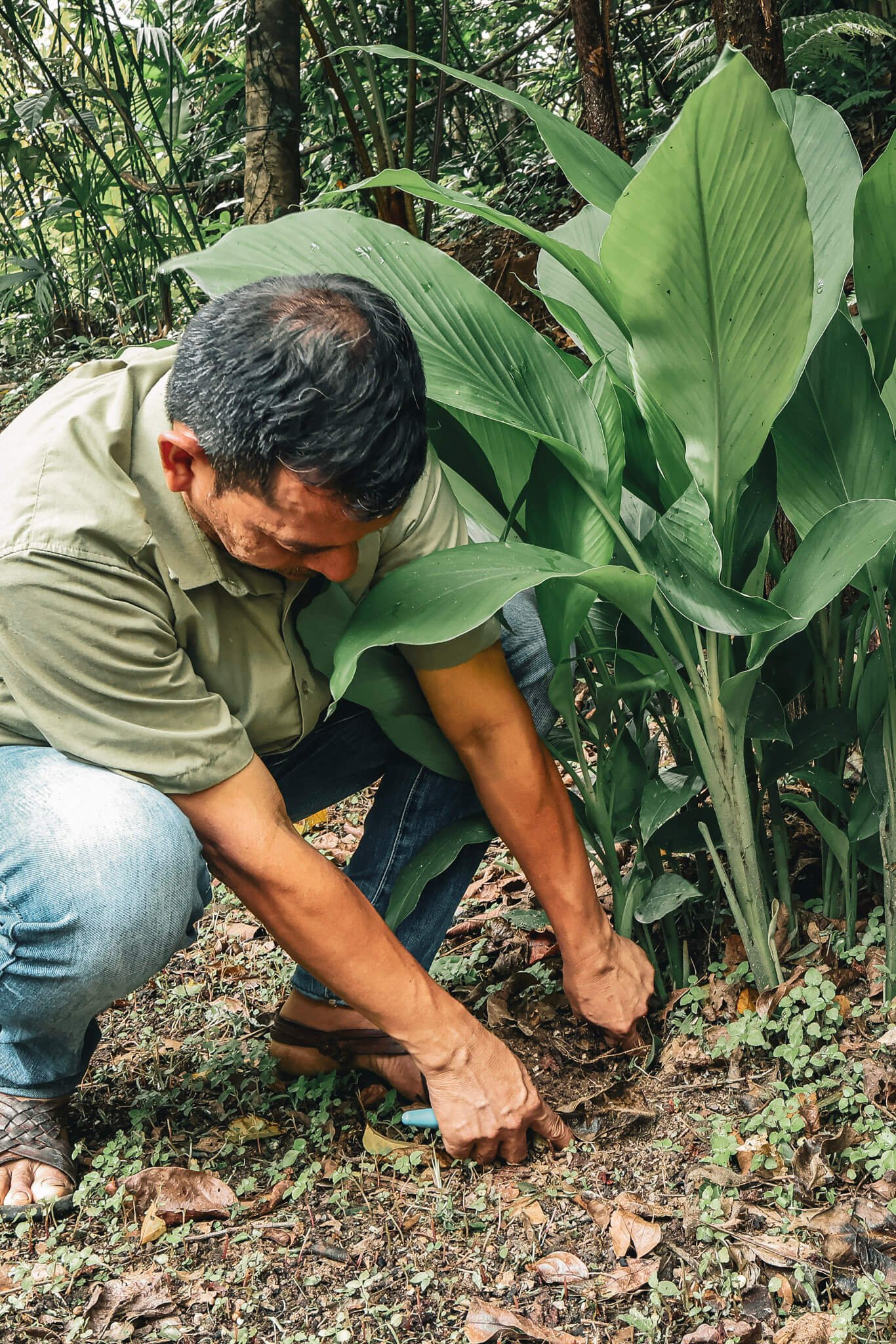
Some of the plants used in making traditional crafts.
A plant that connects generations
As we continued walking, Carlos began showing me the bellota palm. Its scientific name is Carludovica palmata, although its common name changes depending on the region. It may be known as bellota, toquilla, quimú, or sucanca.
Every part of the plant has a purpose. The young leaves are used to obtain the fiber, the outer layers can be used for other crafts, and the leaves themselves have traditional uses. Very little goes to waste.
As Carlos explained the process, he carefully separated the fibers while telling me how the family still follows the phases of the moon when harvesting the young leaves, a practice passed down through generations. More than a technical explanation, I felt I was watching knowledge remain alive because there are still people willing to teach it.
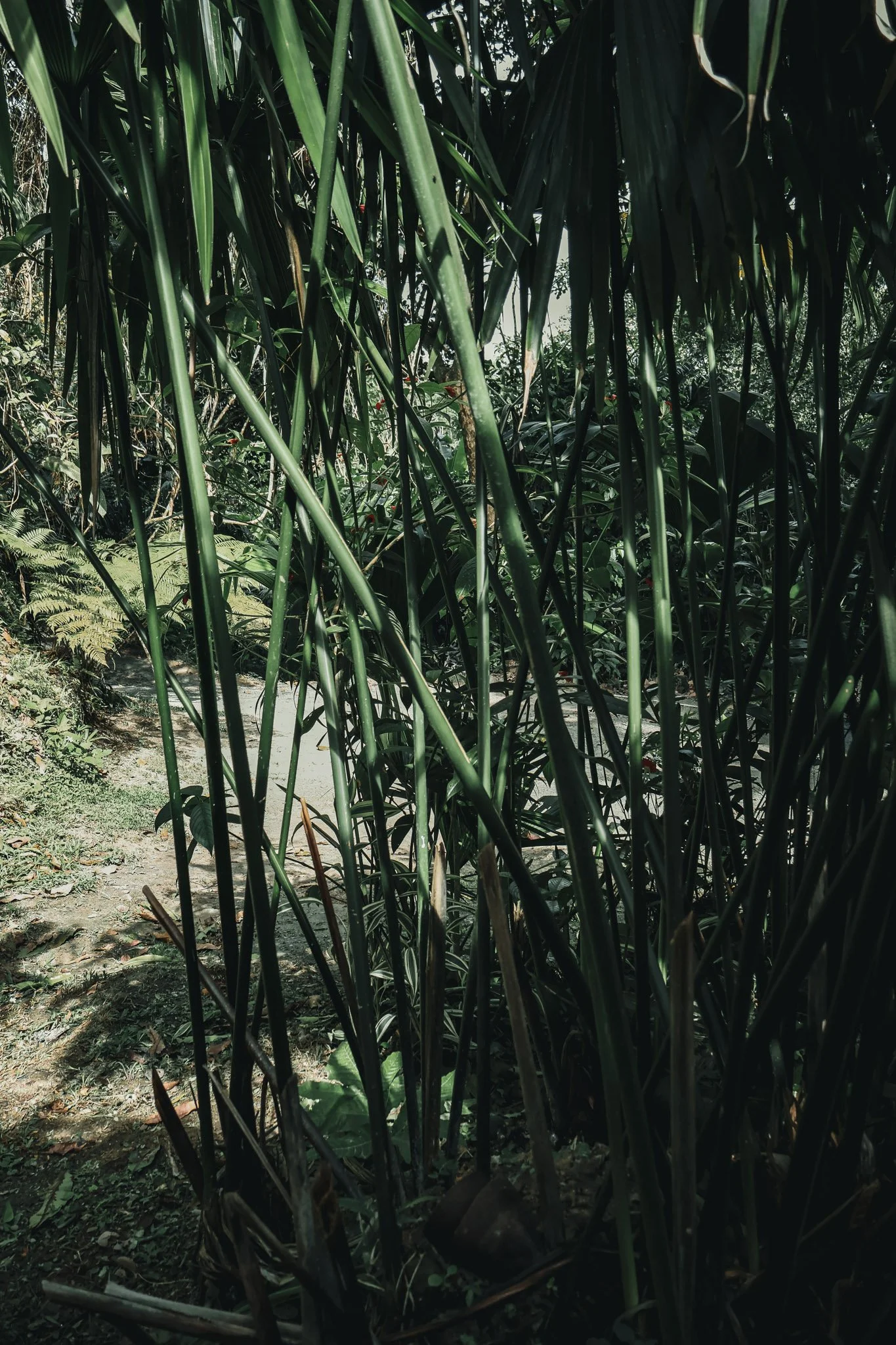
Bellota palm, scientifically known as Carludovica palmata,
A short trail with a long story
The trail runs through most of the farm and can be completed in less than half an hour. I quickly realized, however, that its value was not in the distance covered, but in the stories that appeared along the way, between the plants, trees, and conversations.
During the walk, you can see different varieties of palms, learn about the natural dyes used in traditional crafts, and understand how this small piece of land has supported a family for generations. At the highest point, the view opens toward several mountains across northern Coclé and the Antón region. For those interested in exploring farther, the family can also coordinate hikes to some of these peaks with guides from the local community.
It was there that one of the moments I remember most from the visit took place. Carlos paused and began reciting a poem by Coclé poet Martina Andrión,, dedicated to Sofre.
“Naciste cual Olimpo
en faldas de Turega,
en céfiros arrullos
y lunas de ilusión…” (Link to read full poem in spanish).
As I listened to those verses, I understood that they were not simply another part of the walk. They were a way of sharing the affection this family feels for their land and for the people who have shaped it generation after generation.
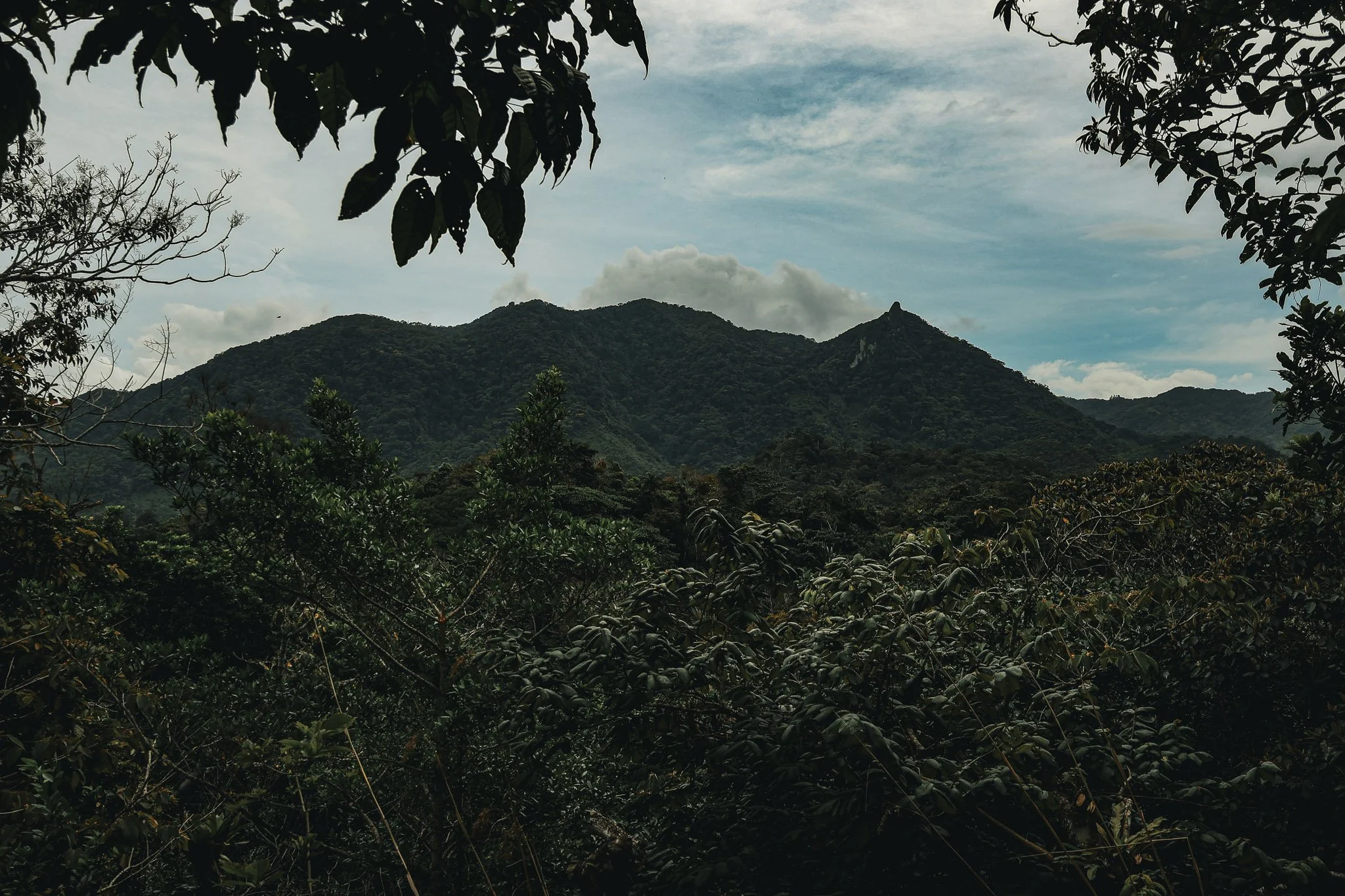
View of Cerro Turega from the upper section of the farm. - Cerro Turega
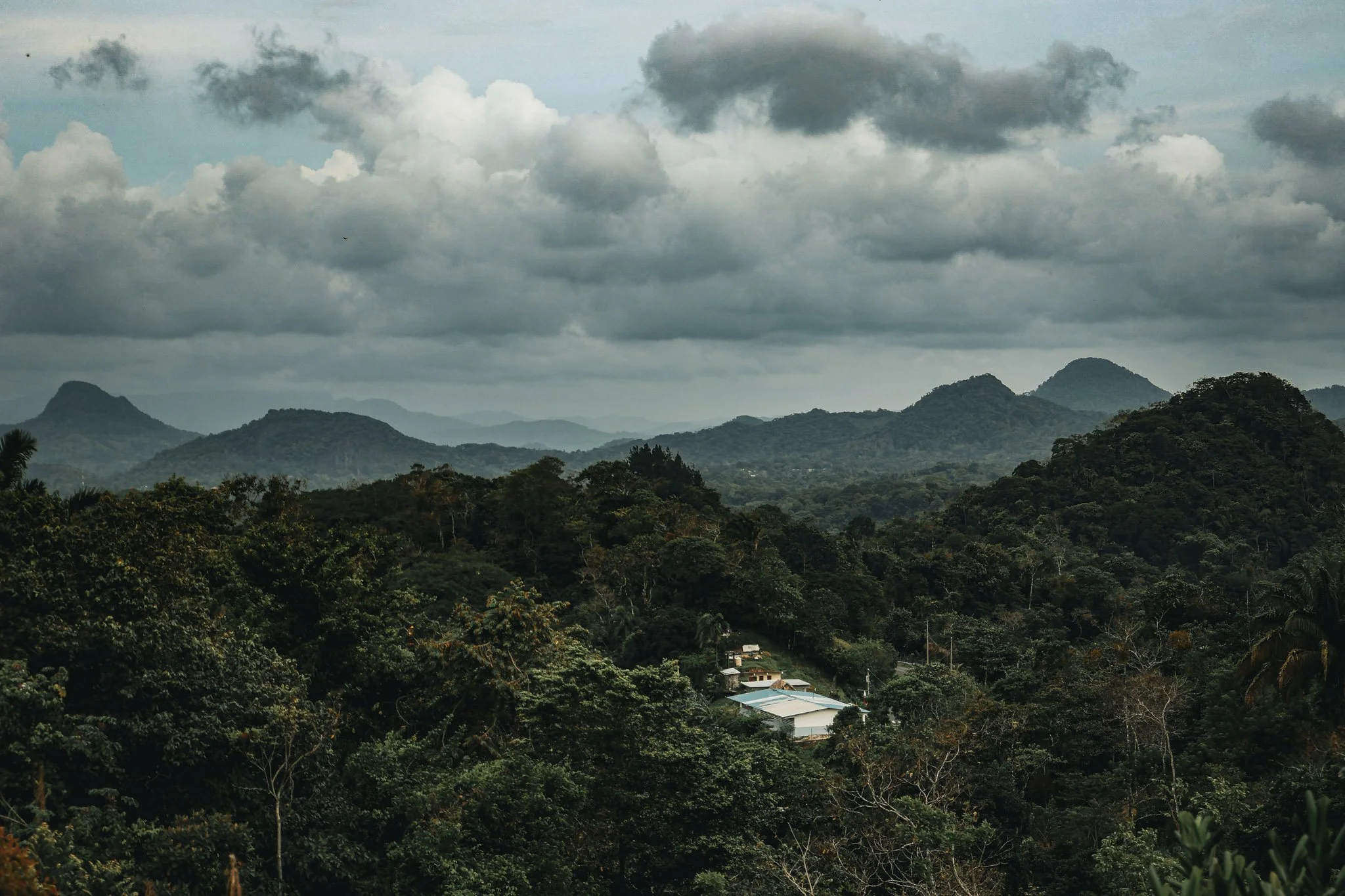
From this point, you can also see Yerba Buena, Cucusal, Luisa, Atre, Tagua, Piña, Llorón, and Chichibali.
A small natural spring
Later, I met Tía María. Together, we walked to a small natural spring near the farm. She told me that when she was a child, this was a large swimming hole where people from the community would bathe, wash their clothes, and spend part of their day together.
Today, that same spring provides water to several communities in the area. With a smile, she told me:
“We miss the swimming hole… but at least we have water.”
It was a simple phrase that captured quite well how places can change without completely losing their history.
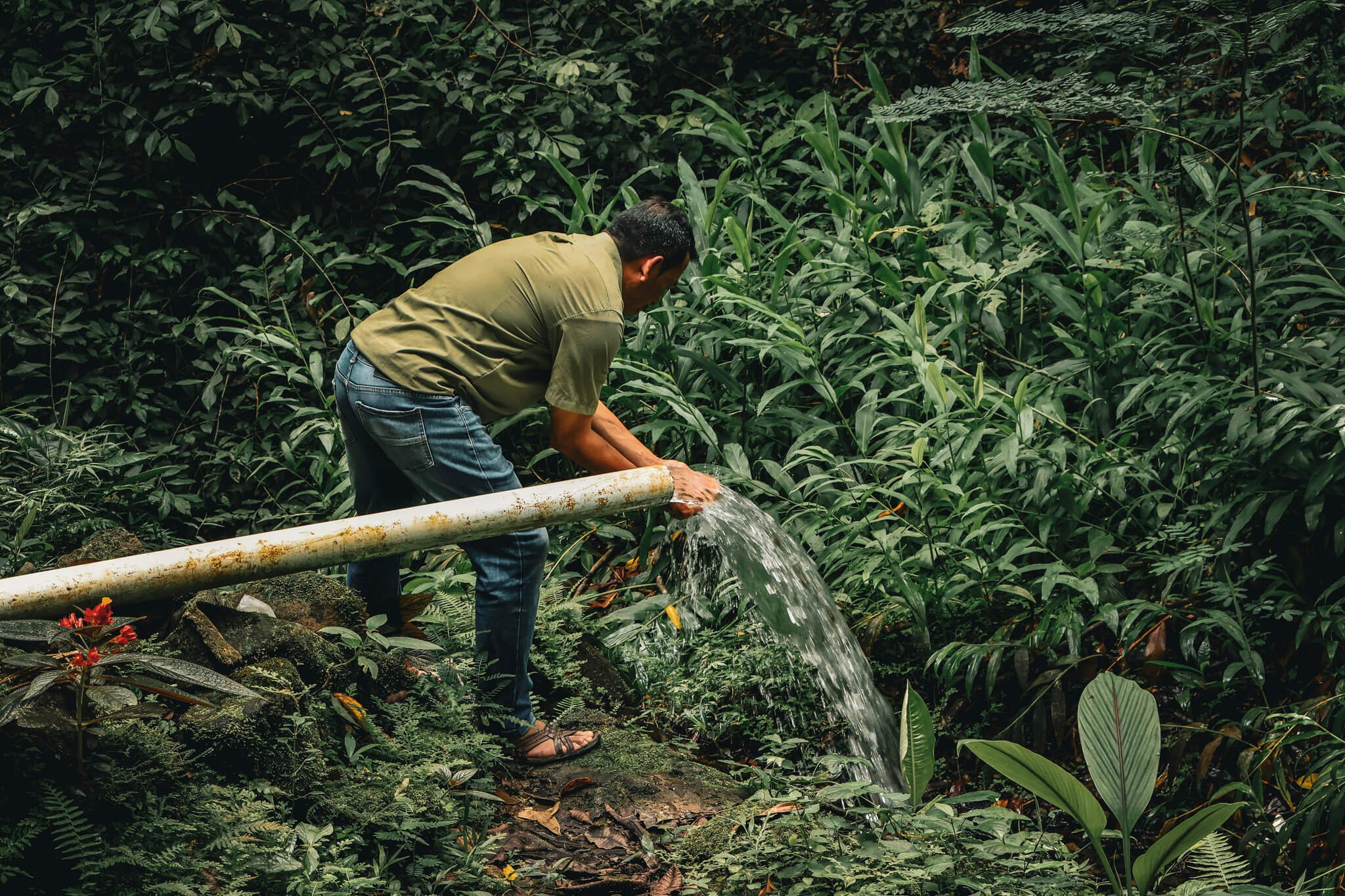
The natural spring now provides water to more than five communities.
What this visit left with me
On my way back, I found myself thinking about how often we talk about preserving a plant, a craft, or a tradition. But perhaps the hardest thing to preserve is none of those things. It is the willingness to keep sharing them with the people who come next.
At Finca Palma Bellota, I felt that this was the real work of the Soto family. Caring for the palm matters, but teaching others why it is worth caring for is what truly allows that knowledge to remain alive. In the end, I understood that traditions do not survive simply because someone preserves them. They survive because someone is always willing to pass them on.
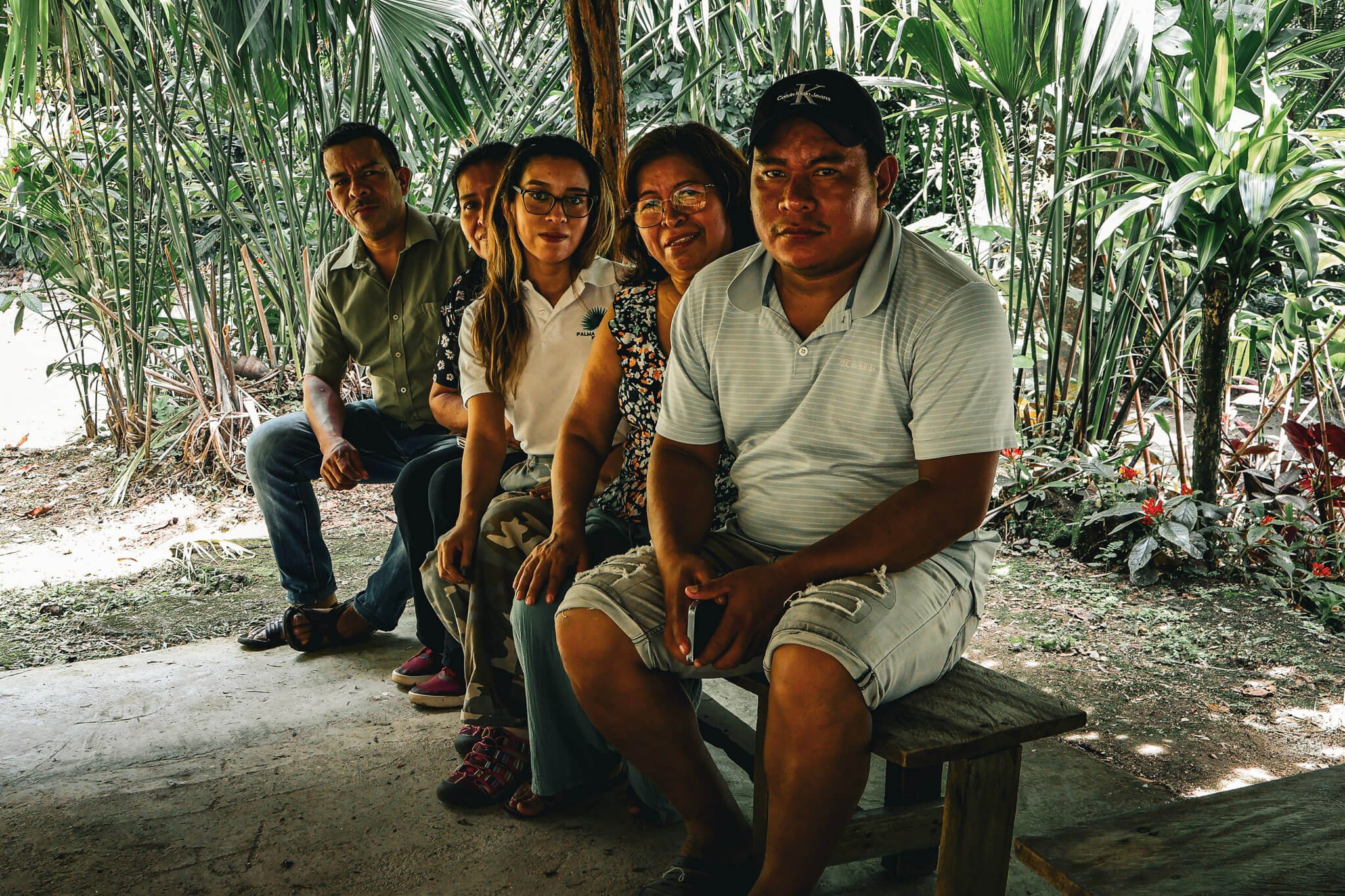
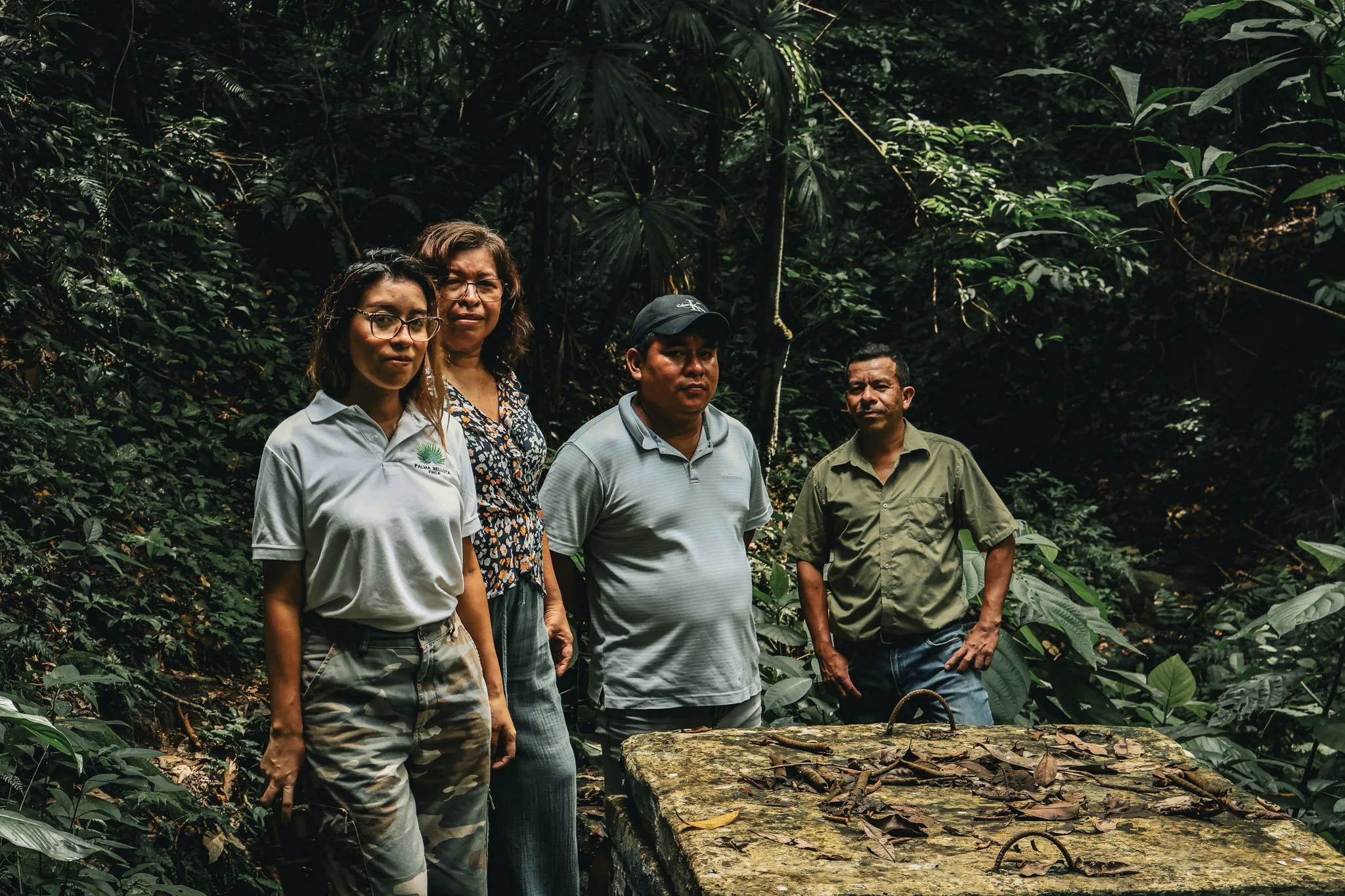
Part of the family that keep the tradition alive.
Information for your visit
Location: Sofre, La Pintada District, Coclé Province, Panama. (Google Map Link)
What can you do at Finca Palma Bellota?
Guided tour of the farm
Interpretive trail
Introductory traditional craft workshop
Natural-dye workshop
Locally grown coffee and meals
Hikes to nearby mountains
Accommodation at Cabaña Turrututu (Link Airbnb).
Important: Visits are available by advance reservation only. This allows the family to prepare for each visit and personally accompany every group throughout the experience.
Instagram: @fincapalmabellota