Corpus Christi in Parita: A Tradition That Lives On Across Generations
🇺🇸 Many people know Panama's Corpus Christi celebrations for their devils, elaborate masks, and colorful dances. My visit to Parita showed me something else: a community that continues to pass its history from one generation to the next. Beyond the masks, I found teachers, families, children, and adults keeping alive a tradition where faith, culture, and identity continue to walk side by side.
Reading time: 10–12 minutes
Arriving before everything begins
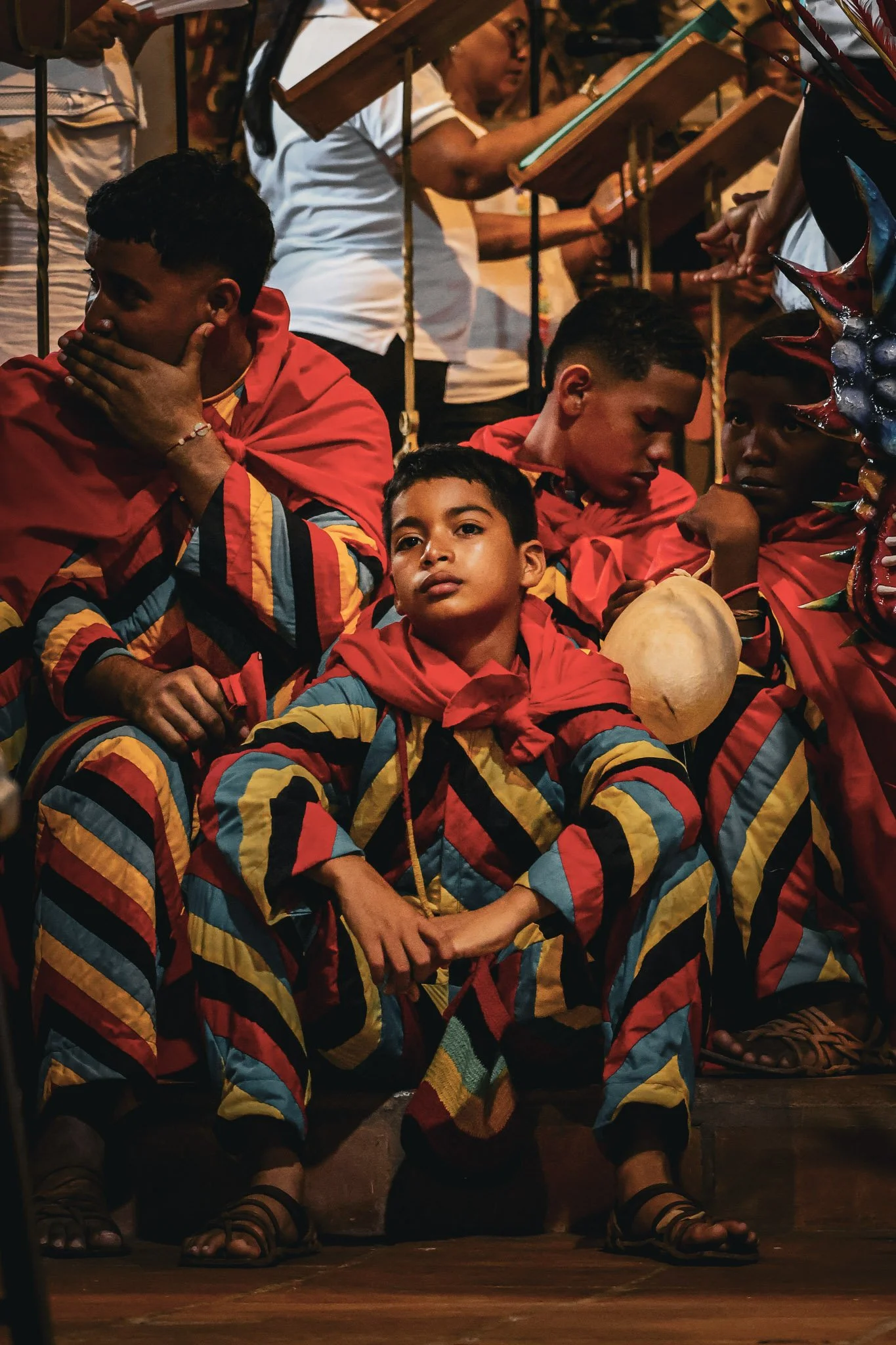
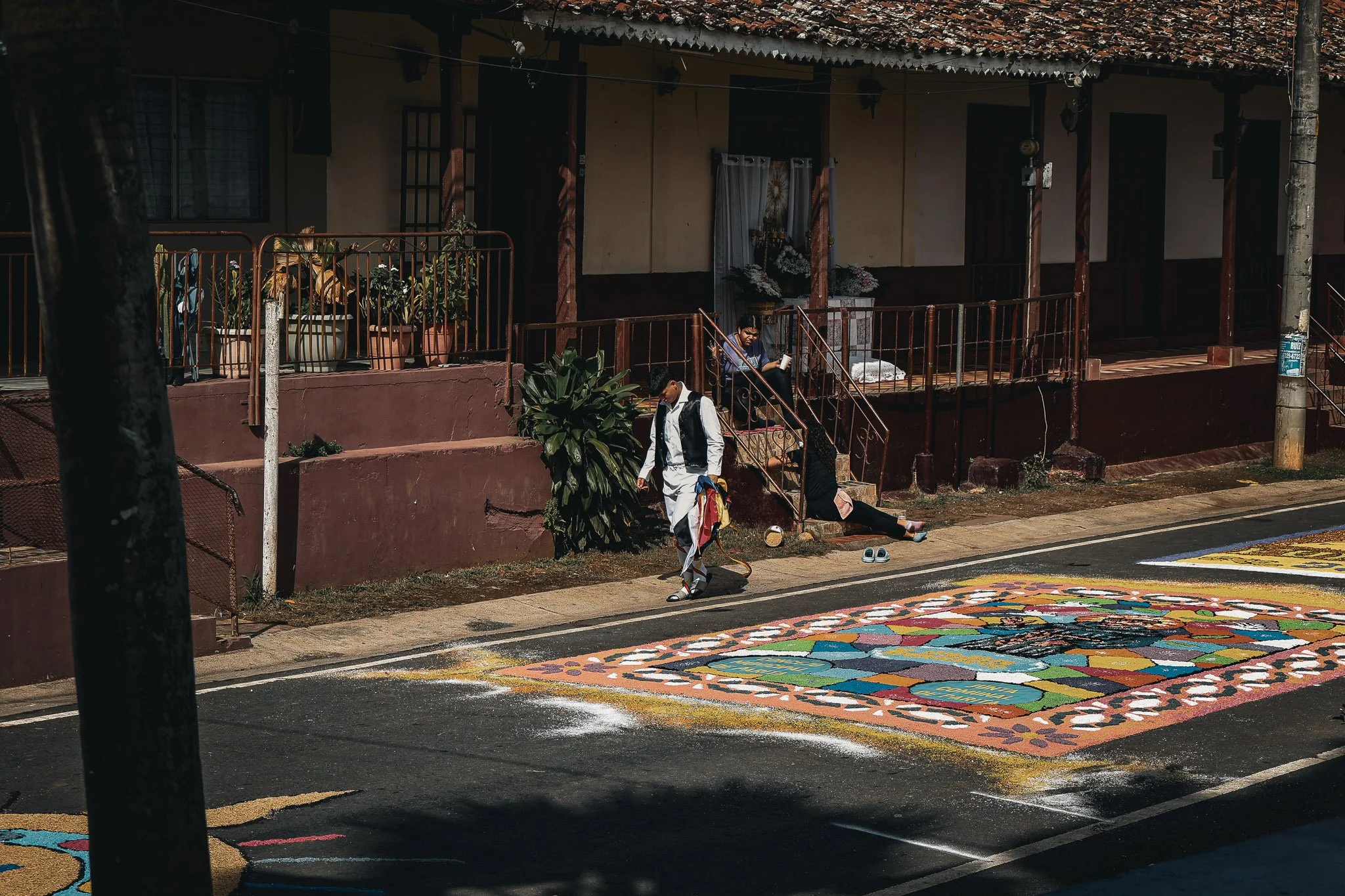
There were still more than two hours before Mass, but the town square was already beginning to fill with people. Teachers were putting the finishing touches on the carpets, children ran between designs made from colored sawdust, entire families prepared their costumes, and little diablicos waited patiently for the moment when they would enter the church.
As I walked around Parita's main square, I had the feeling that everyone knew exactly where they belonged that morning. Some were building the carpets, others were organizing the dances, and many simply talked while waiting for the celebration to begin.
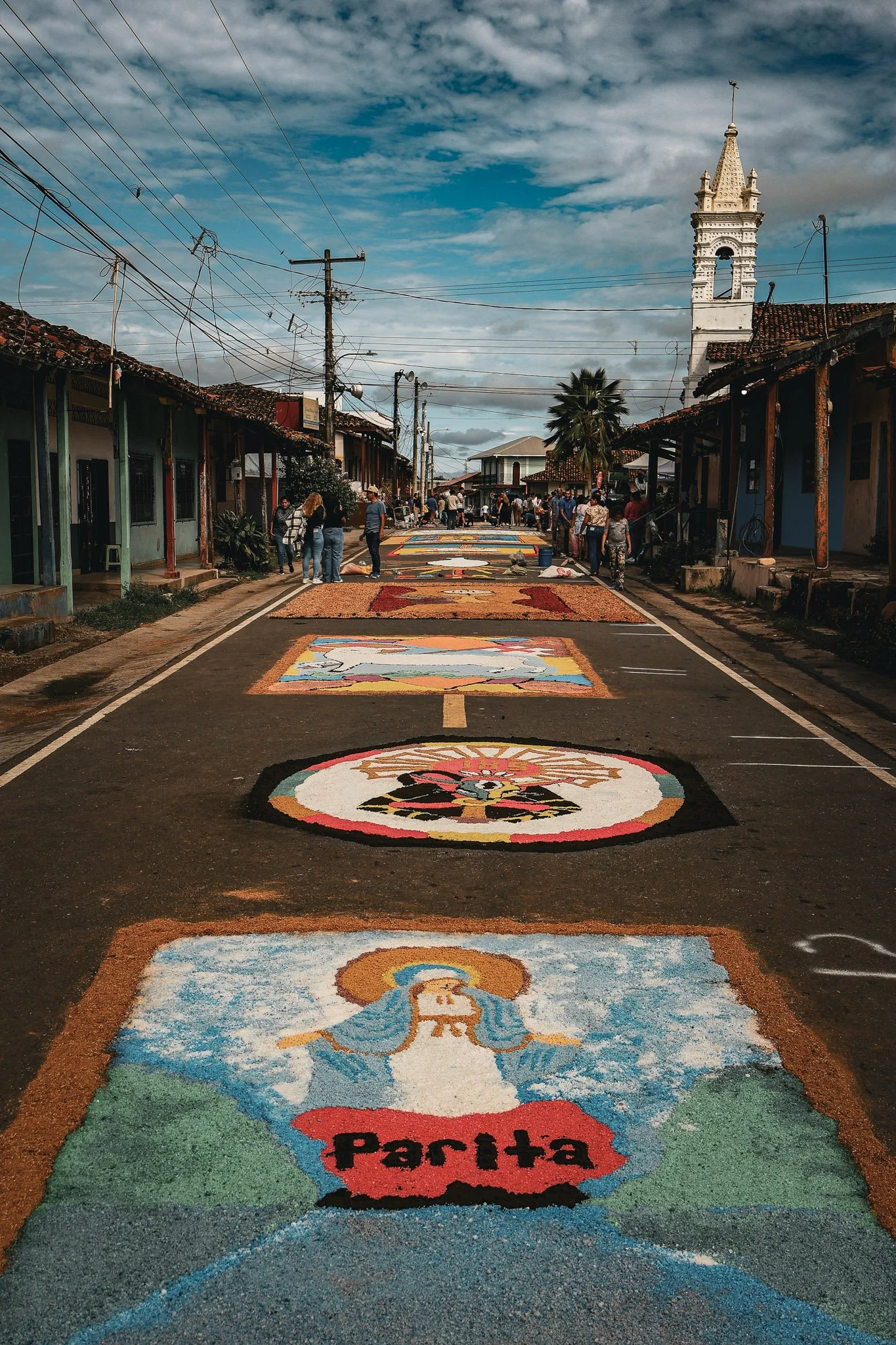
Arriving early on the streets of Parita.
Why Parita?
Every year, Corpus Christi brings together thousands of people around the world to celebrate one of the Catholic Church's most important solemnities: the Body and Blood of Christ. Its origins date back to 13th-century Europe, and when the Spanish brought the celebration to the Americas, it gradually took on characteristics unique to each region.
The same happened in Panama. Although Corpus Christi is celebrated in several towns across the country, each community has preserved expressions shaped by its own history. The dances and traditions associated with Panama's Corpus Christi celebrations were inscribed on UNESCO's Representative List of the Intangible Cultural Heritage of Humanity in 2021.
That was precisely why I decided to visit Parita.
I wasn't interested in comparing one celebration with another. I wanted to understand what makes each community different and how those differences remain alive over time.
Before Mass
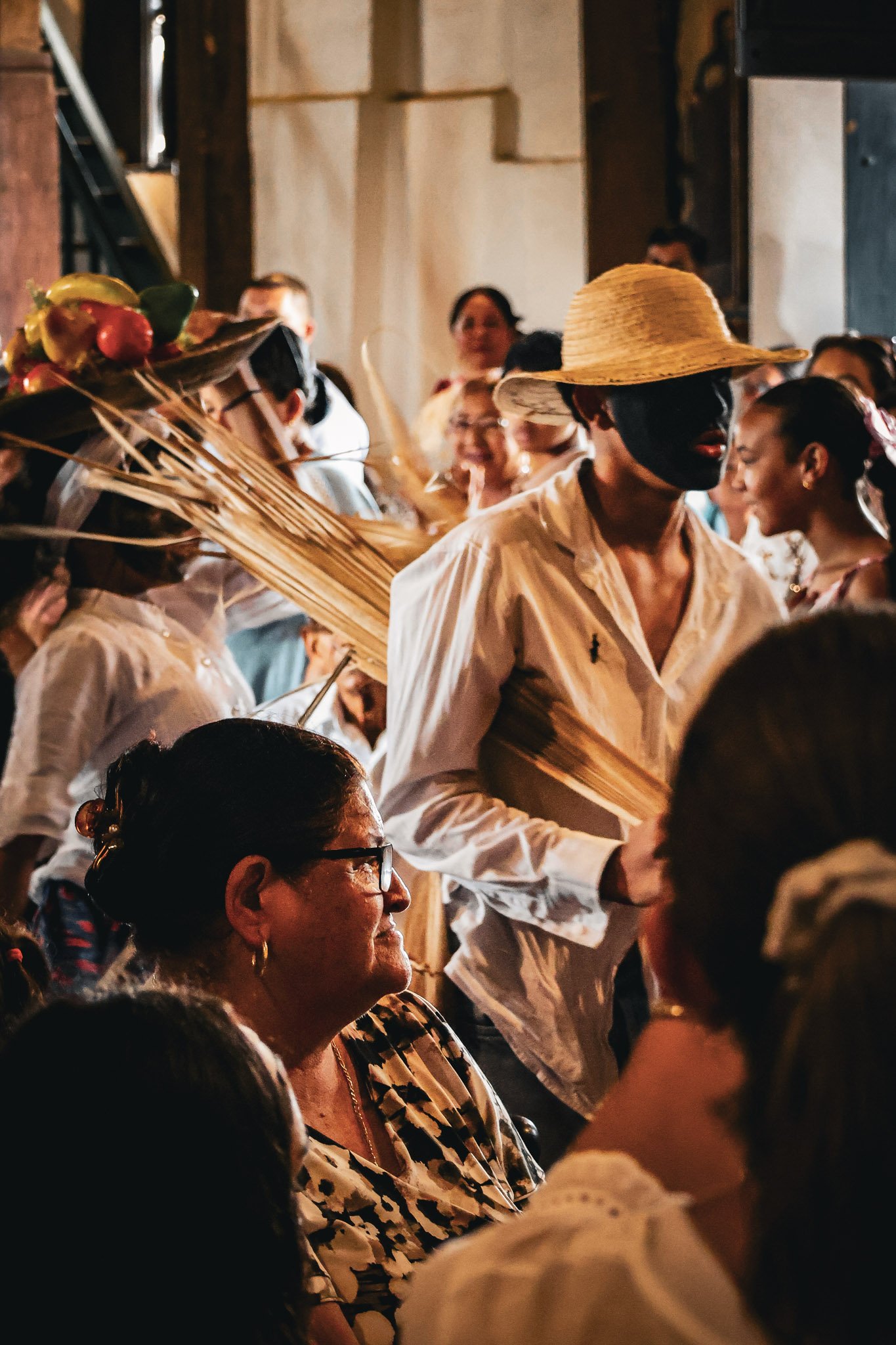
As I waited for the celebration to begin, I watched curiously as young girls dressed as diablicos, teenagers rehearsed their final movements, and adults talked with complete familiarity about something that has been part of life here for generations.
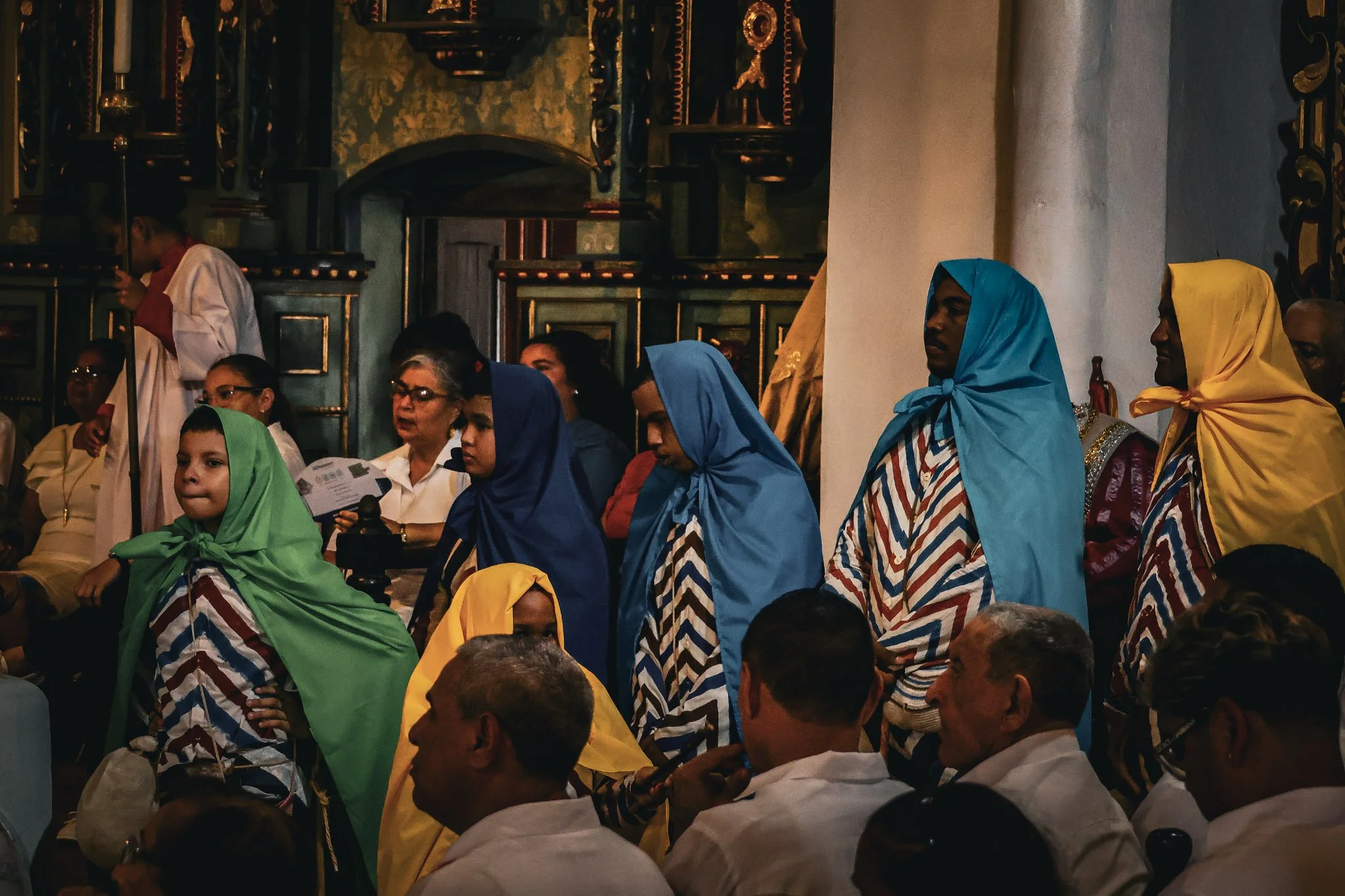
Entire school groups were also walking around the church. Children observed the carpets, asked questions, and waited excitedly for Mass to begin.
I kept thinking about how difficult it can be today to hold the attention of children and teenagers amid so many distractions. Yet there they were, taking part in the tradition.
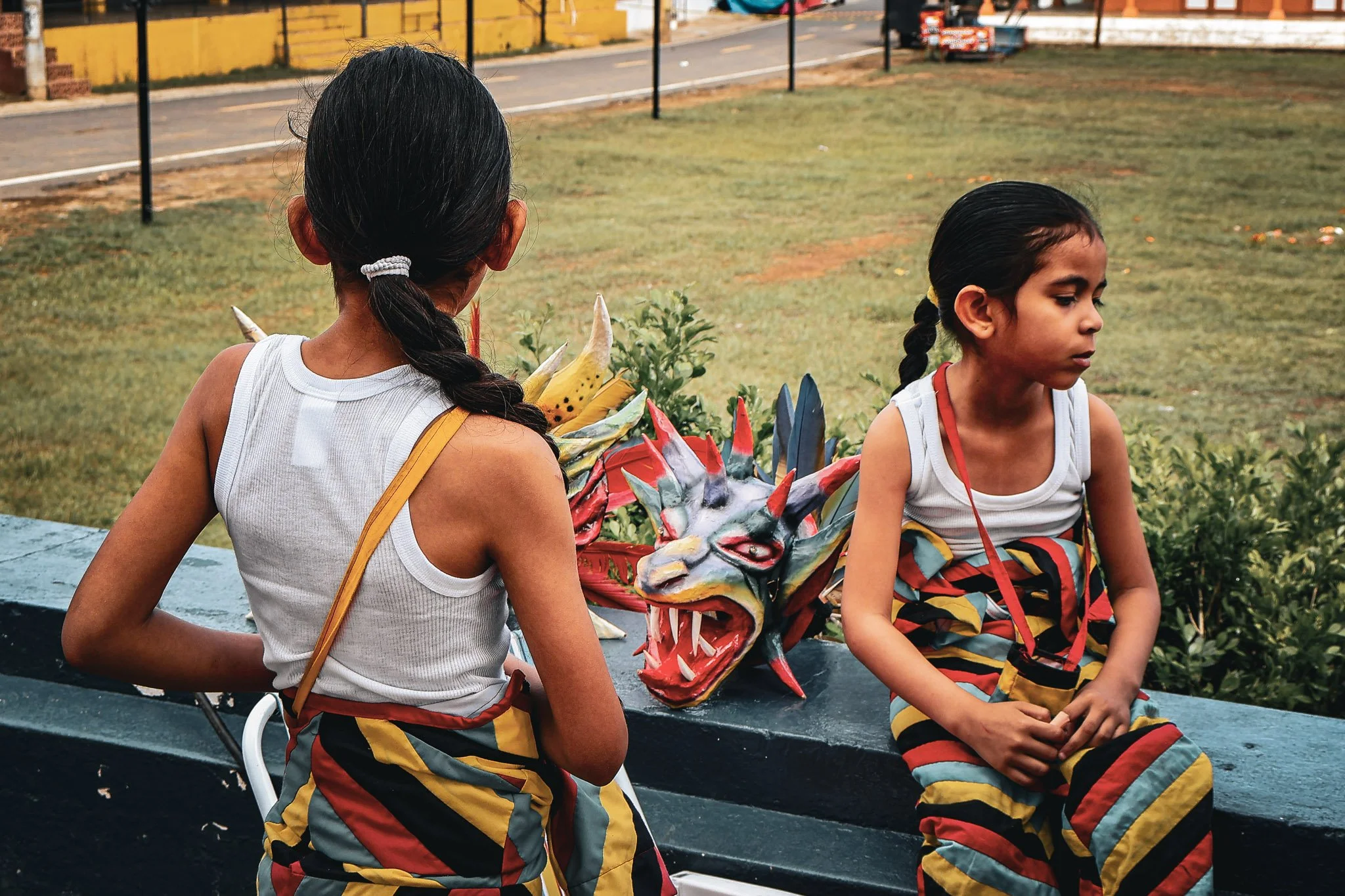
Young girls waiting to participate in the Mass.
History enters the church
The celebration began, and little by little, the different characters and dances that distinguish Corpus Christi in Parita started to appear.
Each has a different origin, but together they tell a story in which Catholic faith coexists with the Spanish, Indigenous, and African influences that helped shape the cultural identity of the town.
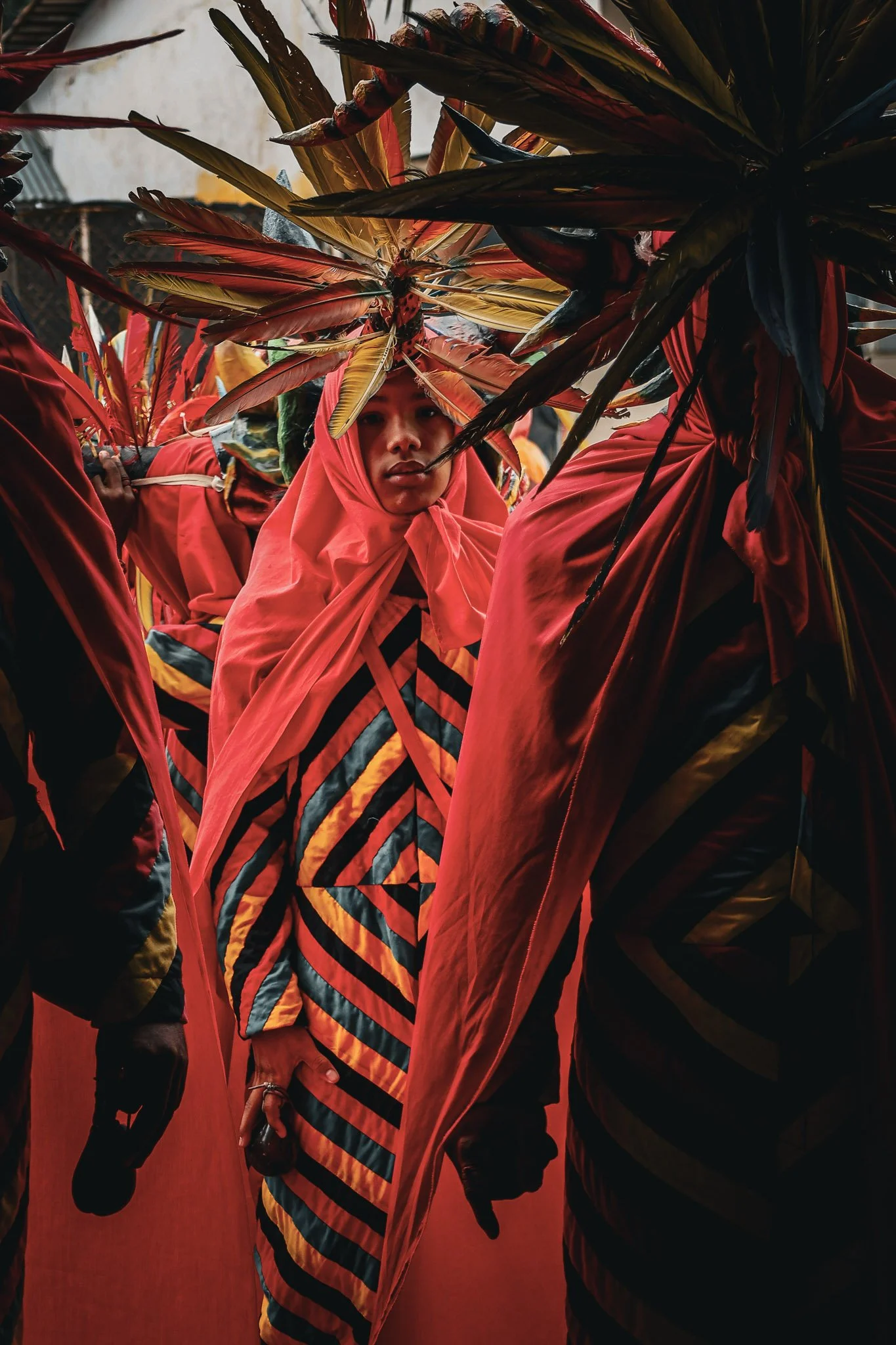
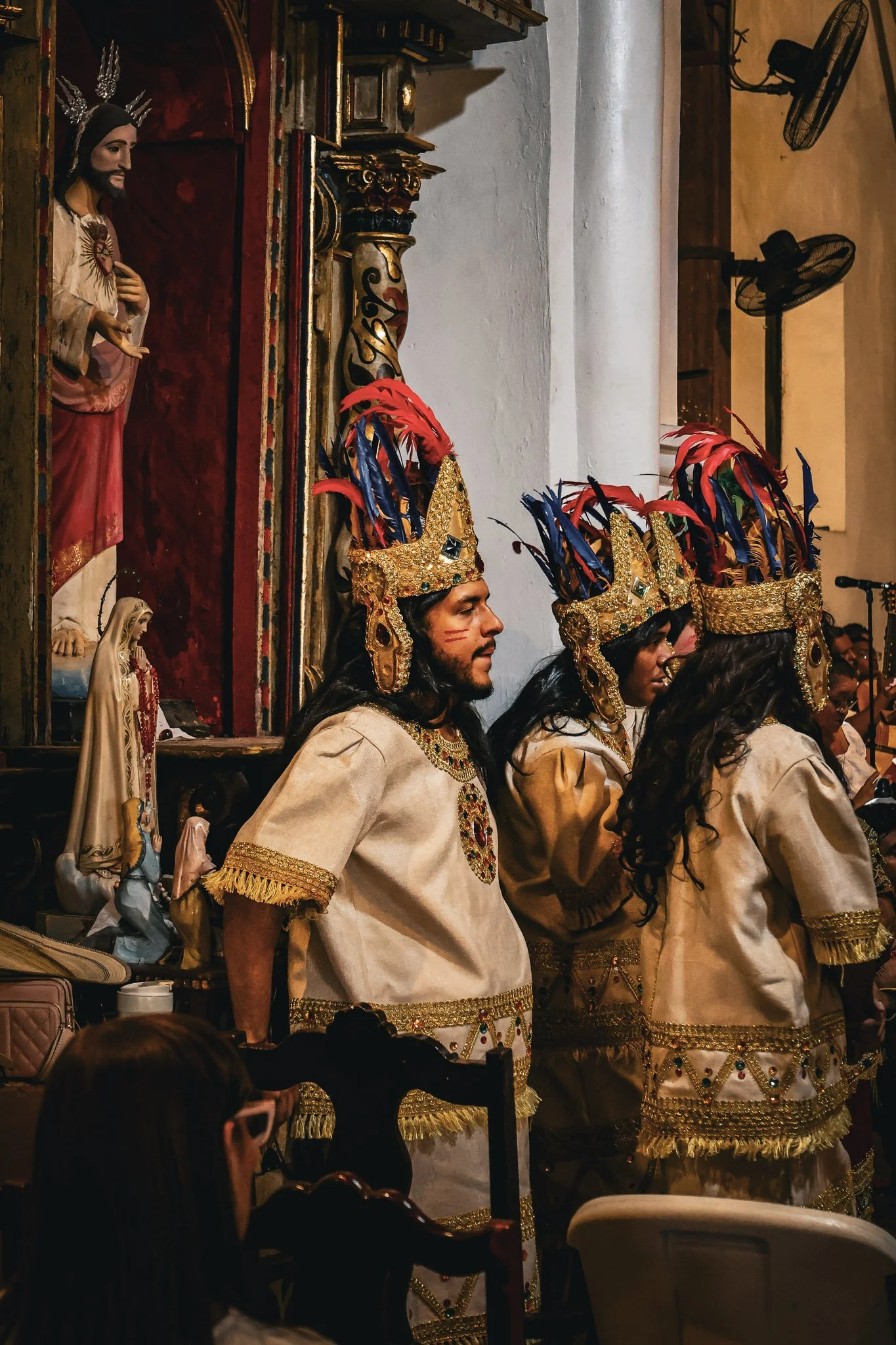
The Montezuma Pariteña recalls an episode from the Spanish conquest of Mexico and is one of the oldest theatrical representations still preserved in Panama.
Then came the Diablico Limpio Pariteño, a distinctive representation symbolizing the struggle between good and evil. In Parita, the dance has preserved characteristics of its own, both in its masks and in the way it unfolds during the celebration.
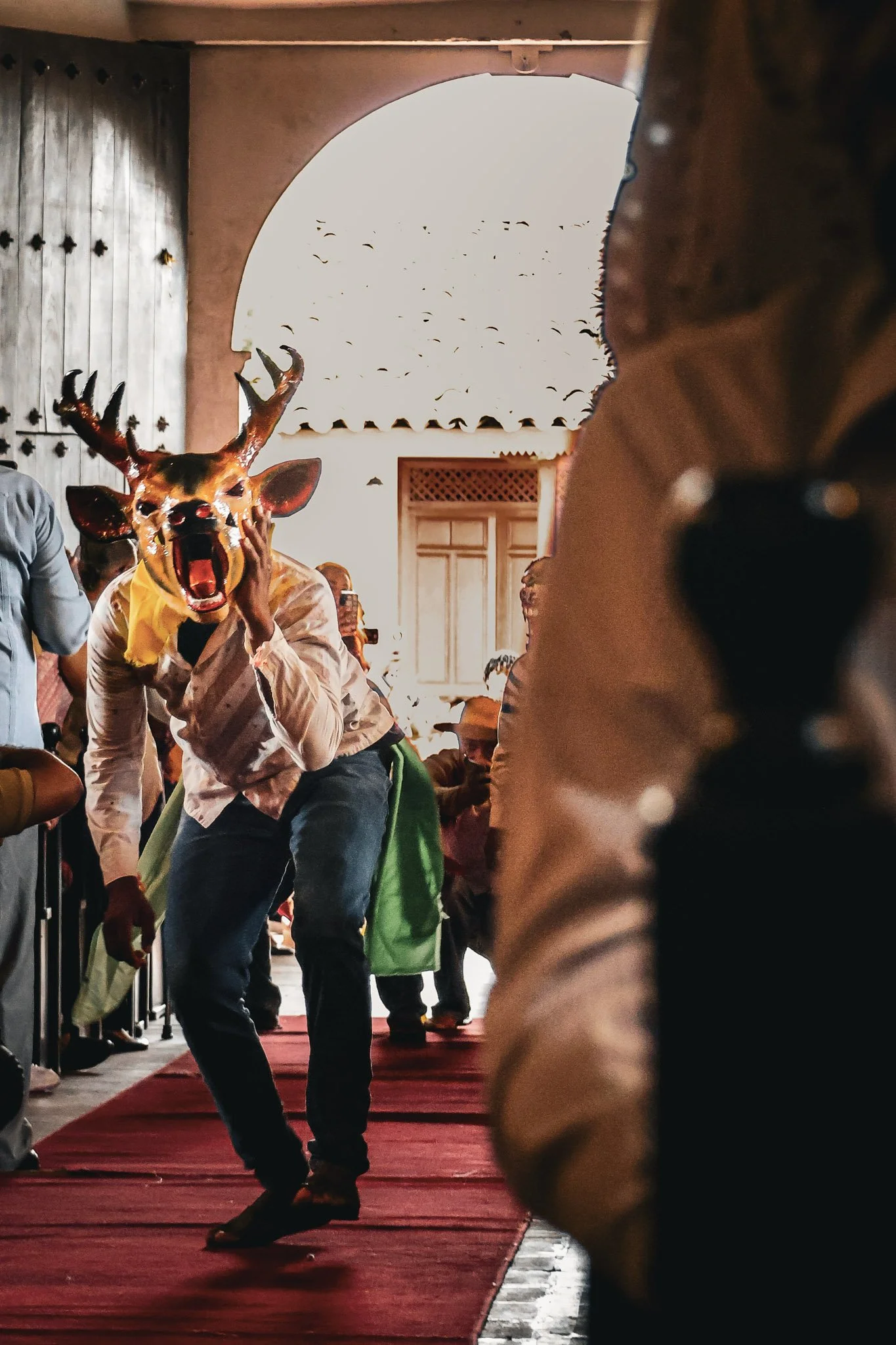
Later came the Diablicos Sucios, both con burrión and sin burrión.
Each version preserves elements particular to Parita. The colors of the costumes, masks inspired by animals from the region, and different interpretations of the dance are reminders of how traditions can evolve without losing their essence.
The Cumbembé also appeared, keeping alive the memory of the Afro-descendant population and recalling the oppression experienced by those who were brought to the region through slavery during the colonial period.
The Torito Guapo Pariteño pays tribute to cattlemen and the rural way of life that has historically characterized this part of Panama.
Finally, El Venao represents the relationship between people and the wildlife that was part of everyday life in these lands for centuries.
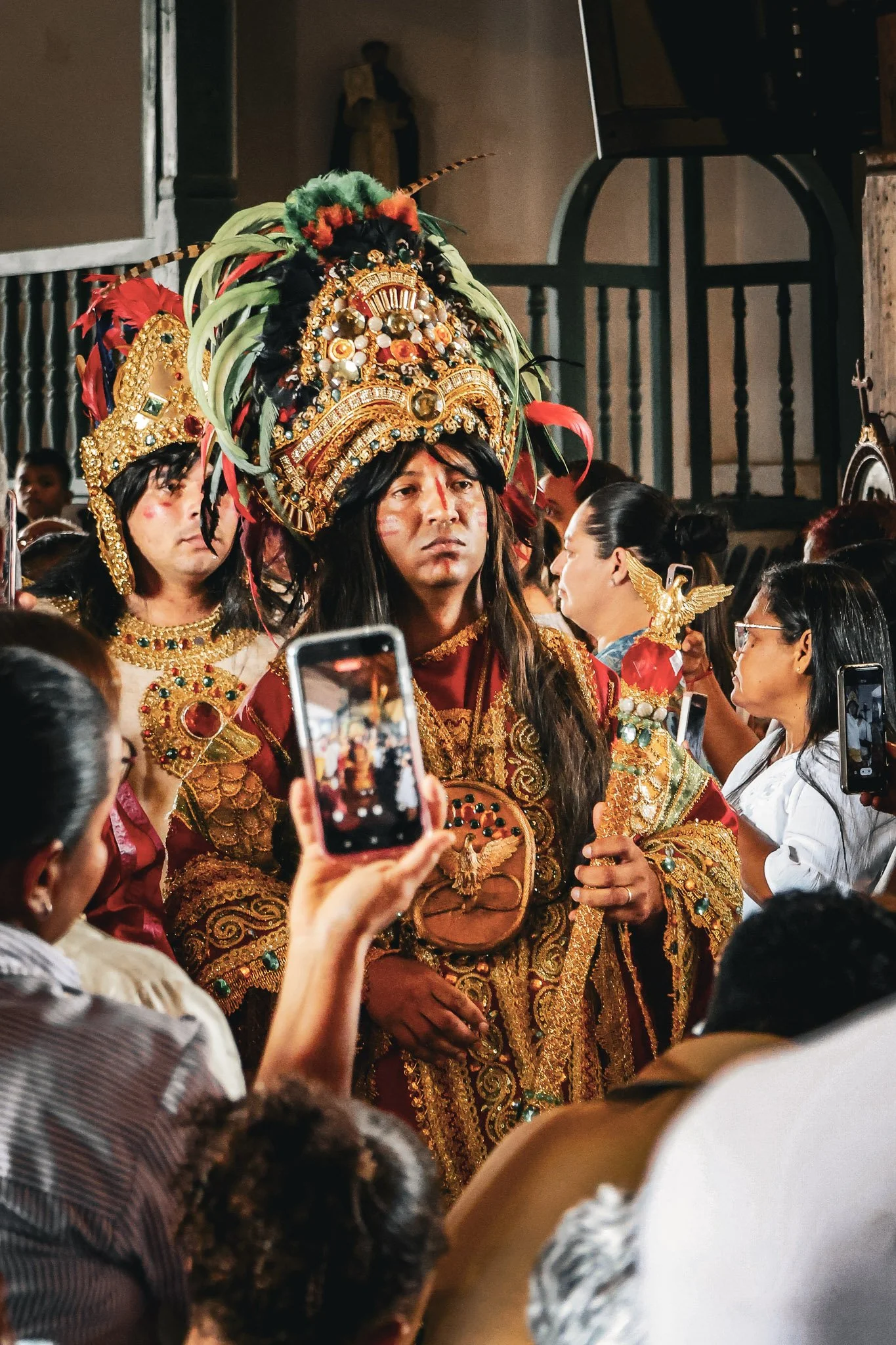
The Montezuma Pariteña during Mass.
Beyond the masks
As all of this unfolded, I began to realize that the real value of that morning was not found only in the dances.
It was in the people who spend hours creating a carpet that will disappear once the procession passes over it. In the teachers who explain the history behind each representation. In the parents helping their children put on a mask for the first time. And in the young people continuing to learn dances passed down from their grandparents.
The masks and costumes may be what first catch your attention, but what keeps the tradition alive happens around them.
A tradition that keeps moving
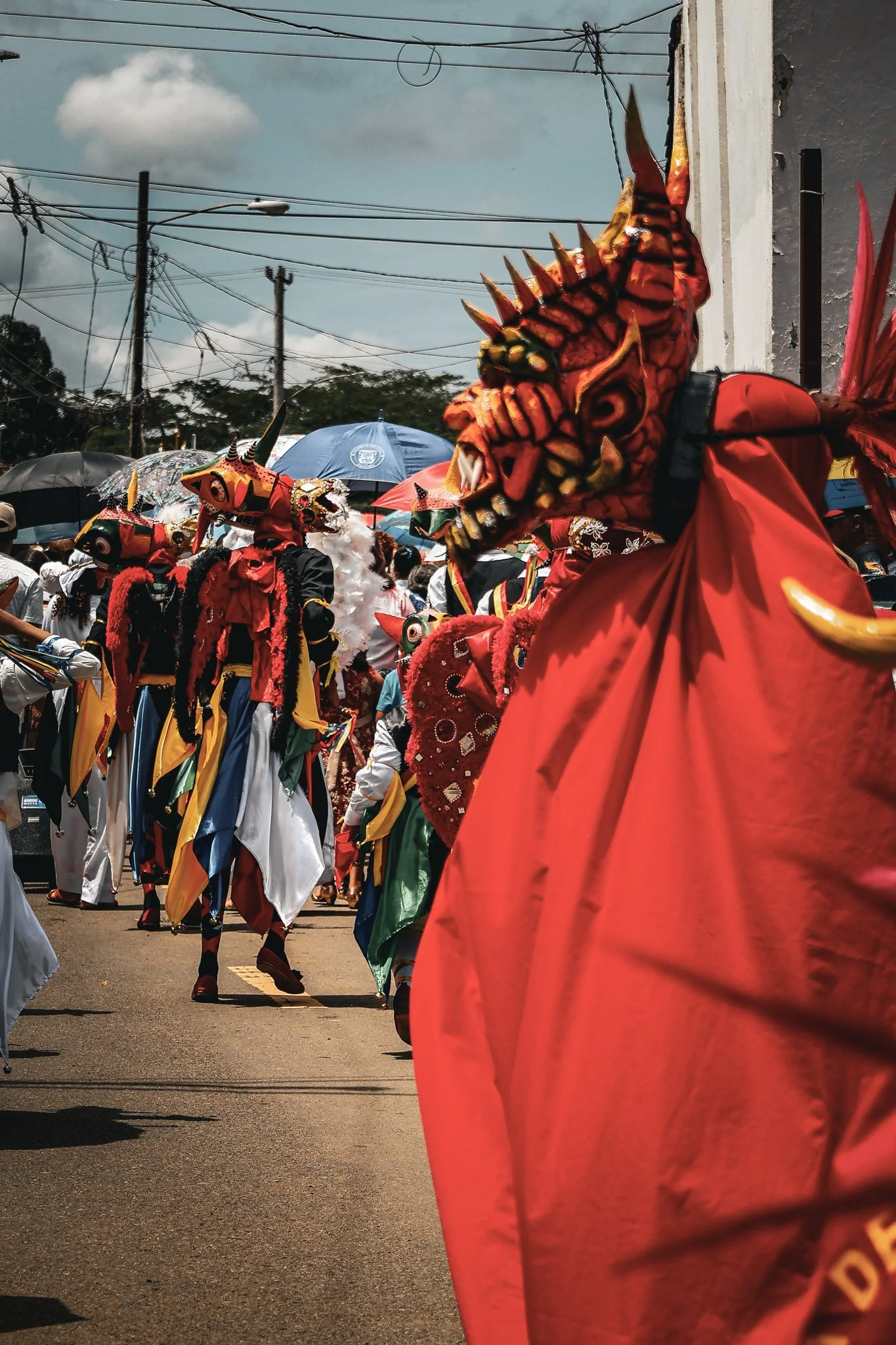
After Mass, I joined the procession through the streets of Parita.
The different dances and characters moved alongside the Blessed Sacrament as the procession stopped at several points for prayer.
By then, I no longer felt like I was simply photographing a religious event.
I felt I was watching a community make the decision to keep an important part of its identity alive.
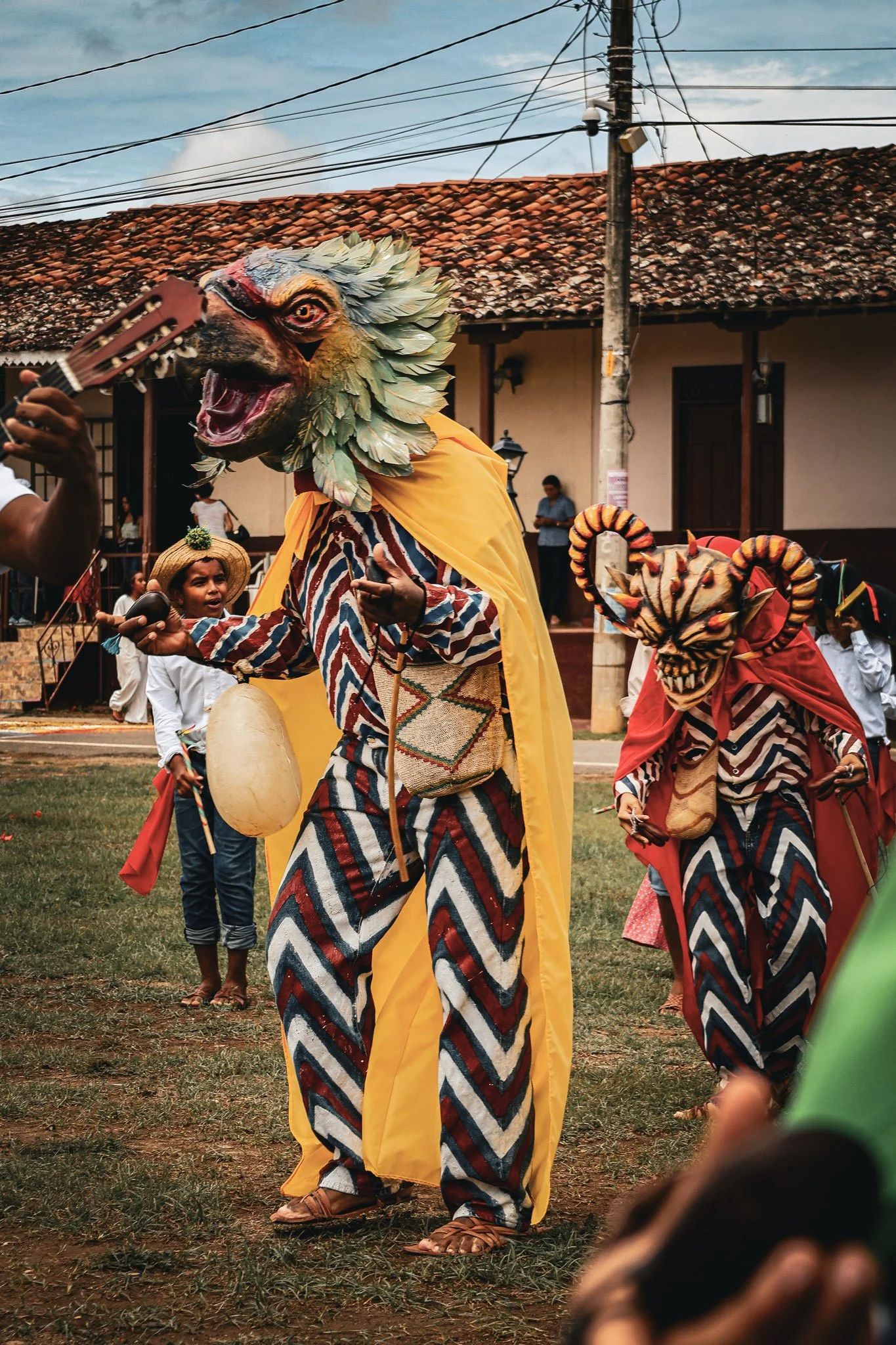
One of the dances during the procession after Mass.
What I took with me from Parita
When I left Parita that afternoon, I wasn't thinking only about the masks, the colors, or the photographs.
What stayed with me was the quiet, natural way an entire town continues to make time for something it considers important.
At a time when many traditions seem to be losing space, there are still children here who look forward to participating, teachers who spend hours teaching their history, and families who continue passing down what they inherited.
Perhaps that was the most valuable image I took with me from Parita.
Not the devils themselves, but the people who, generation after generation, continue to bring them to life.